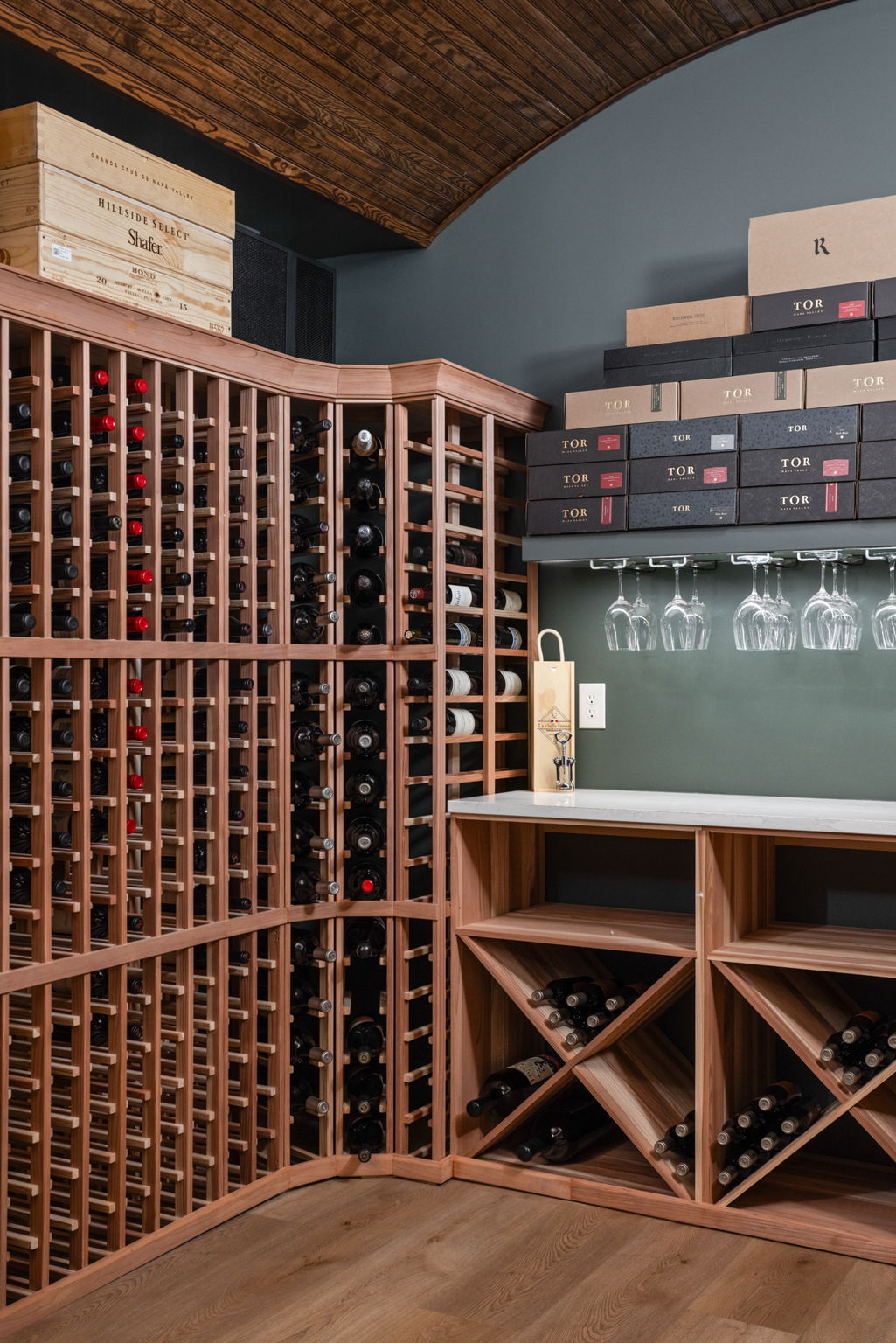
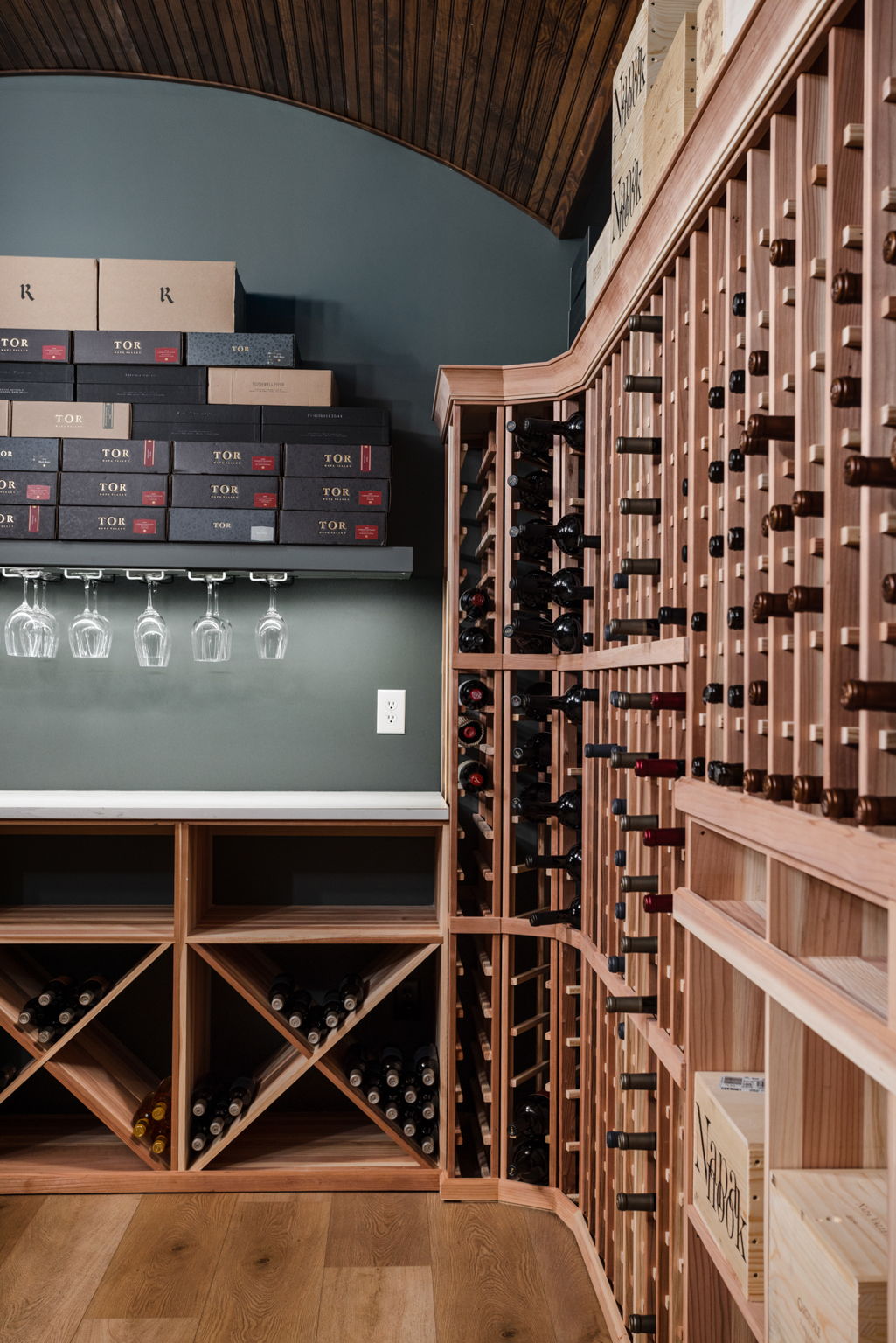
A custom wine cellar should feel like a natural extension of the home. For this Carmel basement remodel, the goal was to create a dedicated wine space that supports proper storage, comfortable serving, and a refined atmosphere for everyday enjoyment and entertaining.
The finished design brings together bottle storage, climate conscious planning, tailored lighting, and a warm architectural character. It is functional in the way a wine room needs to be, but it also feels elevated and well considered in the way a Worthington space should.
Design Summary
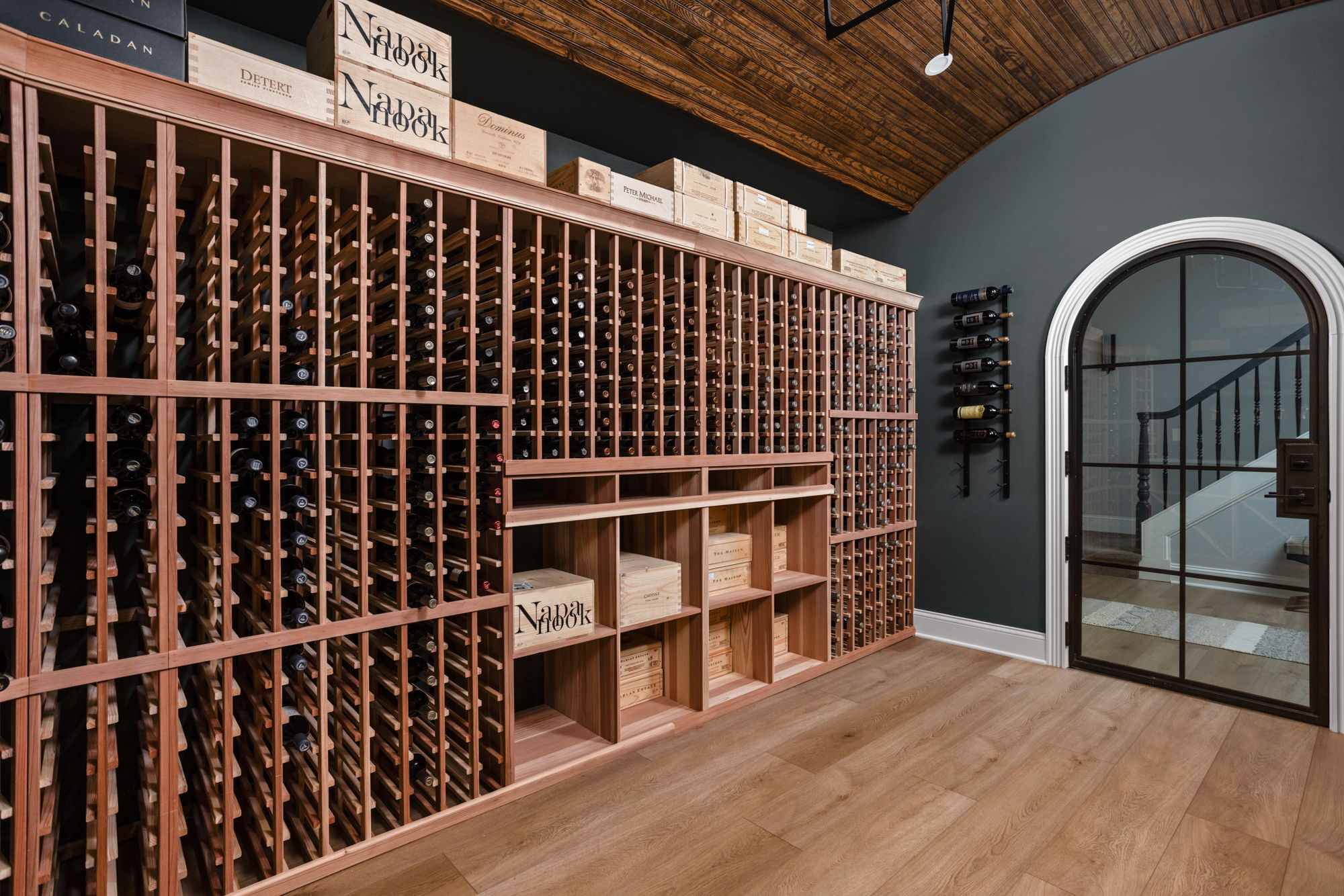
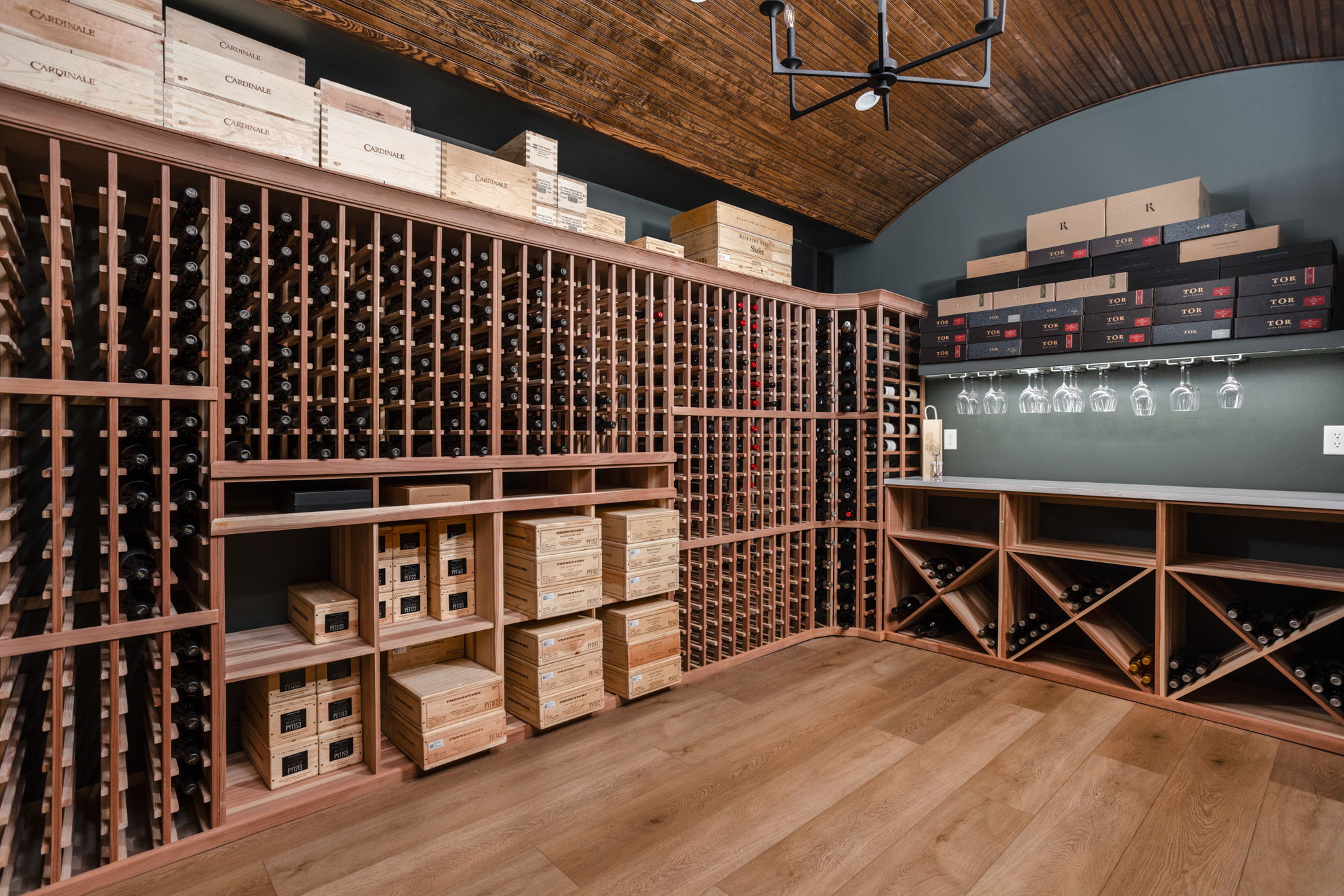
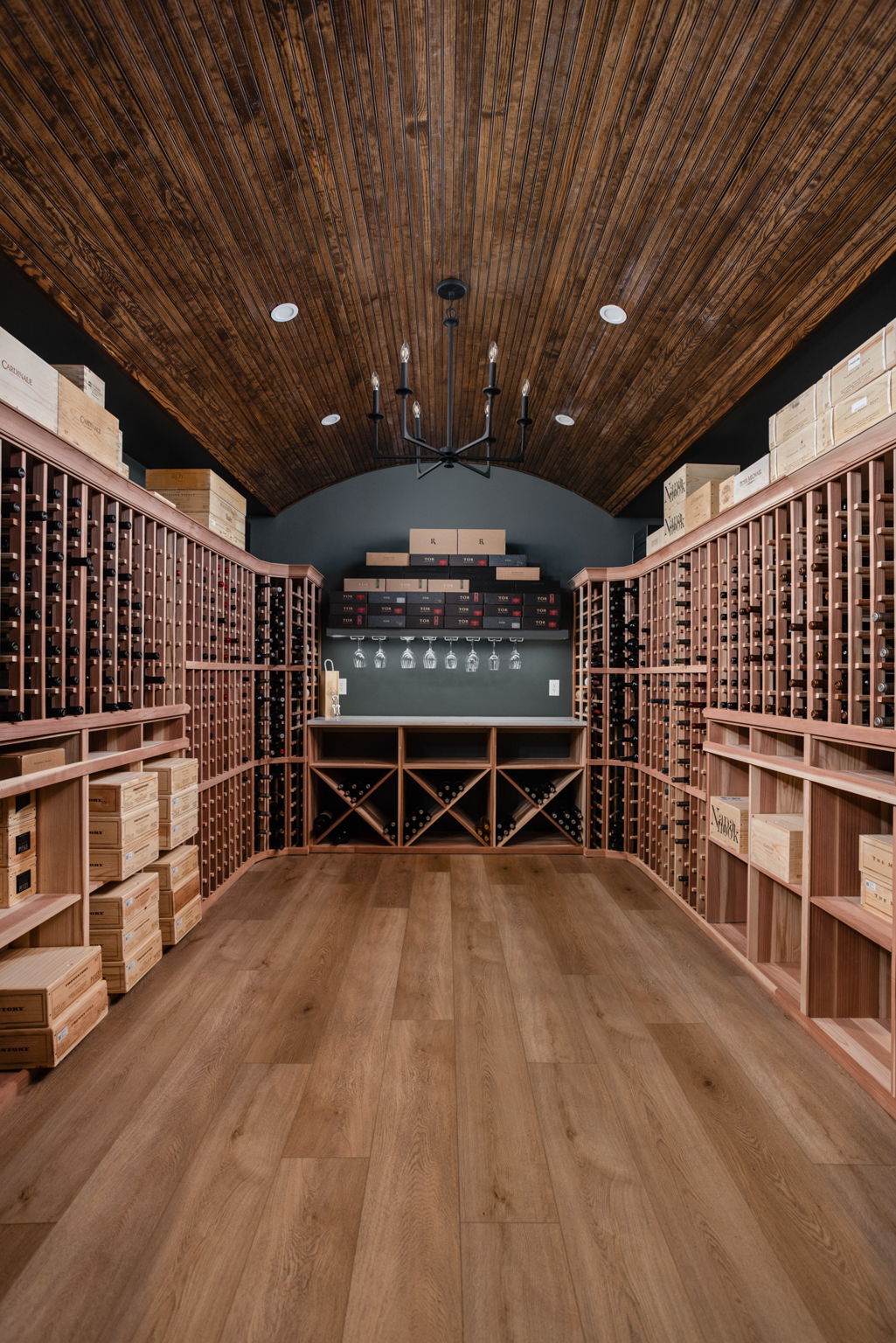
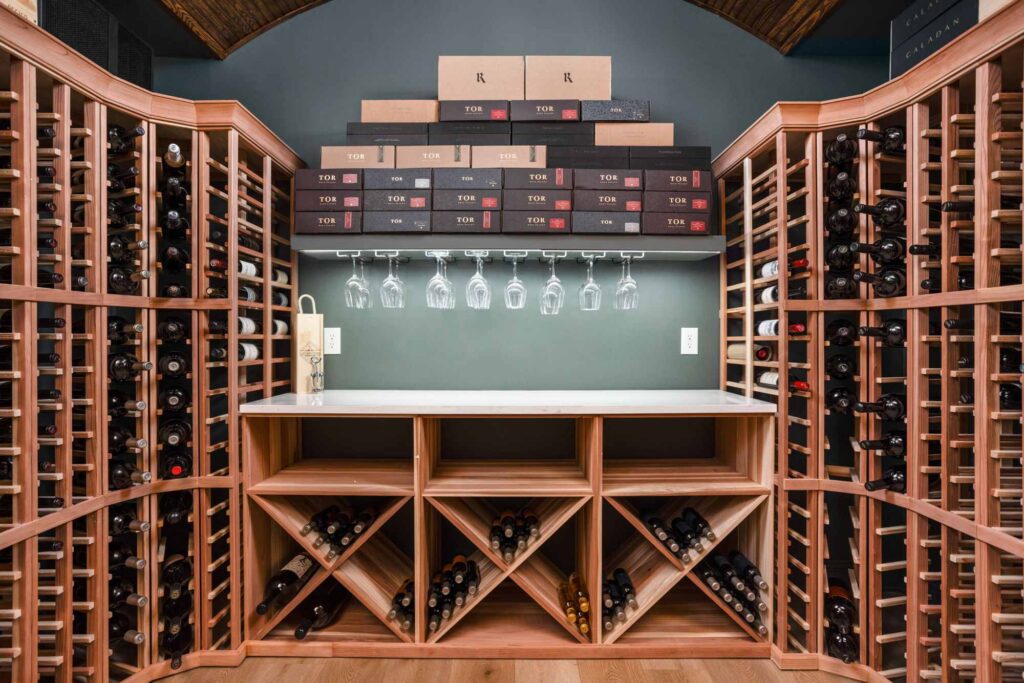
This custom wine cellar in Carmel, Indiana was designed around three priorities: organized bottle storage, environmental planning for the collection, and a layout that feels inviting to use. The room includes full perimeter wine racking, a central serving counter, layered lighting, and architectural details that give the space a distinctive identity within the basement.
Rather than treating wine storage as a simple utility feature, the design turns it into a destination within the home. The result supports collection management, casual tastings, and entertaining in a space that feels finished, intentional, and cohesive.
Before
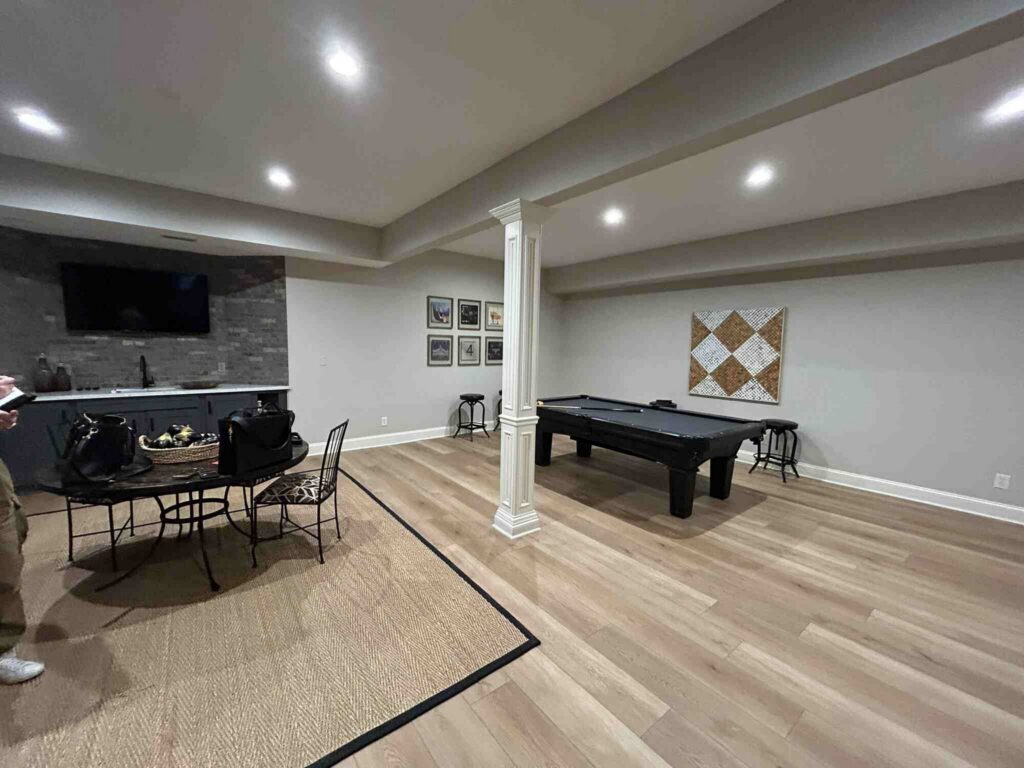
The basement had the square footage to support a dedicated wine room, but the space did not yet have a complete plan for storage, serving, or long term performance. It functioned more as a storage zone than a finished room.
That is often the difference between unused basement potential and a space that adds real enjoyment to daily life. Without a cohesive plan, even a generous area can feel disconnected from the rest of the home.
The Plan
The design includes a defined wine room framed within the basement and built around existing structural conditions. That allowed the space to feel integrated and architectural, rather than temporary or improvised.
Because a wine cellar renovation requires more than attractive finishes, the plan also addressed insulation, vapor barrier strategy, and dedicated cooling unit placement early in the process. In this project, the cooling system location was coordinated to vent to the exterior within a new bulkhead. Nearby HVAC considerations were also addressed so the room could support a more controlled environment.
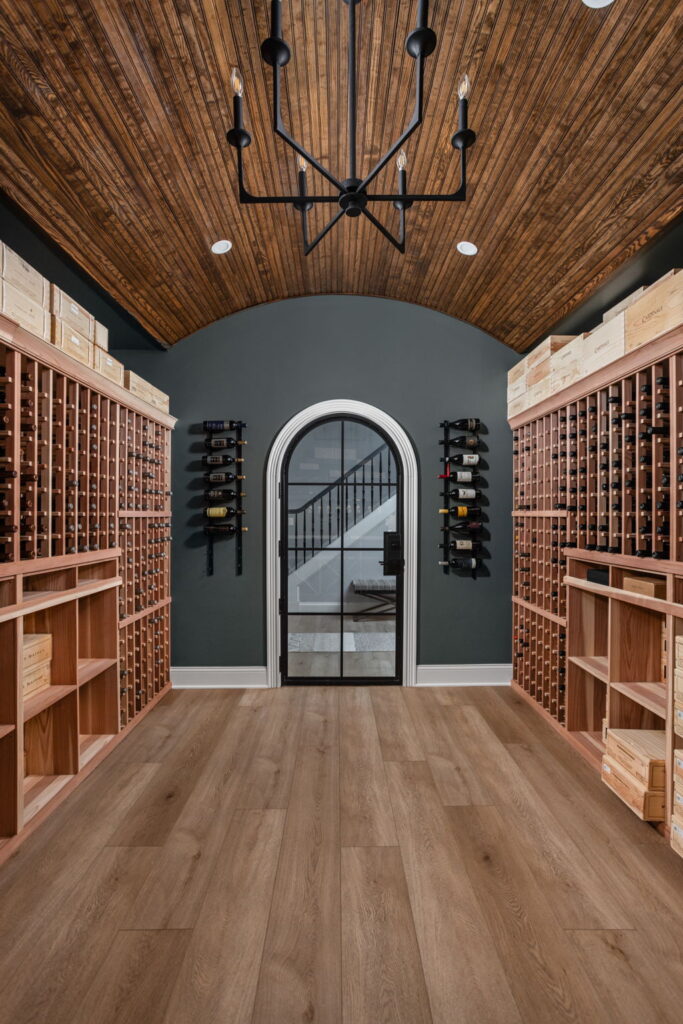
To give the room a more tailored character, the design includes a barrel ceiling with a wallpaper finish. That detail helps the room feel memorable and specific to the home rather than generic basement square footage.
Storage and Organization Features
The details in this Carmel project were selected to make the room work better every day, and to feel special when guests are visting.
Wine storage and serving
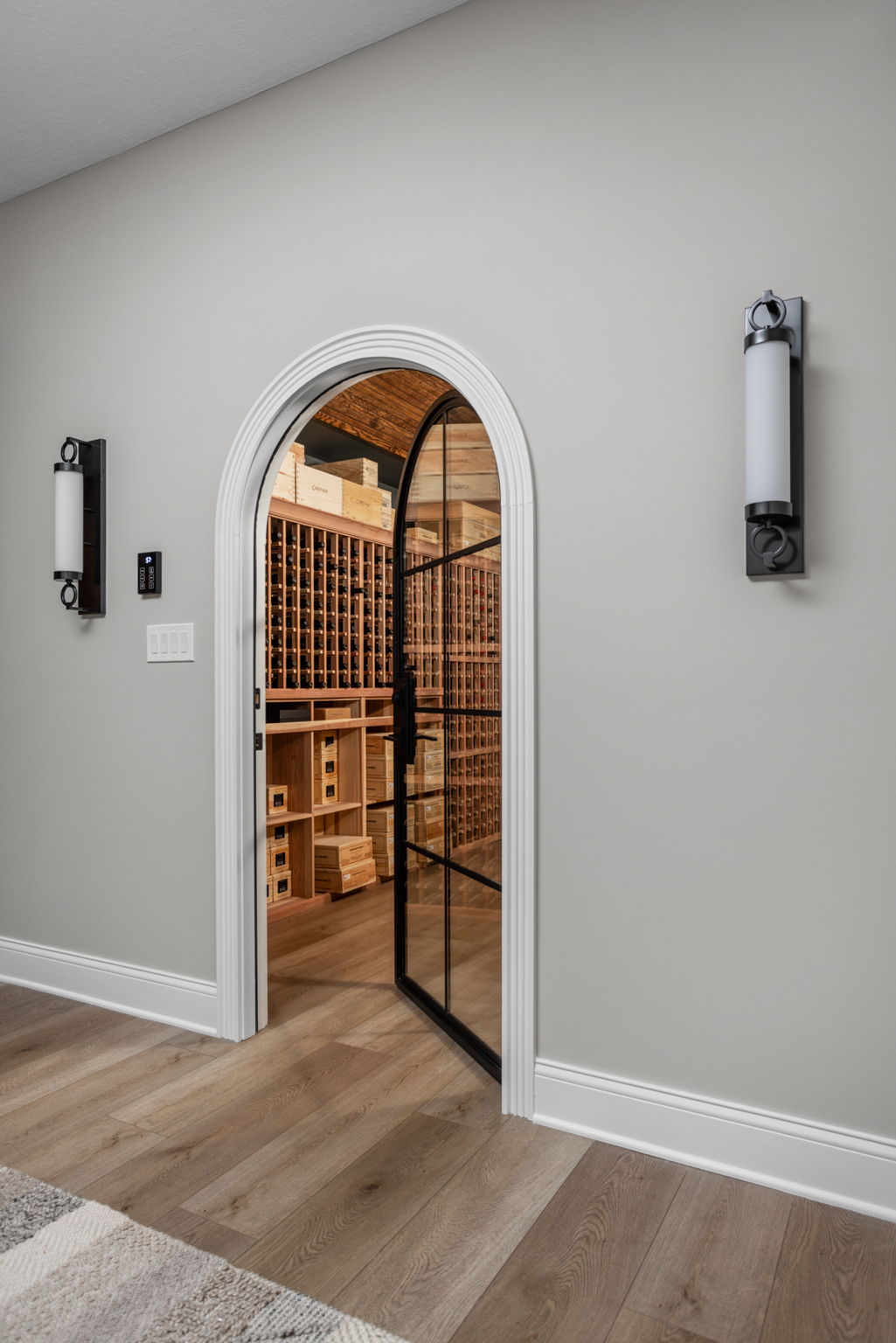
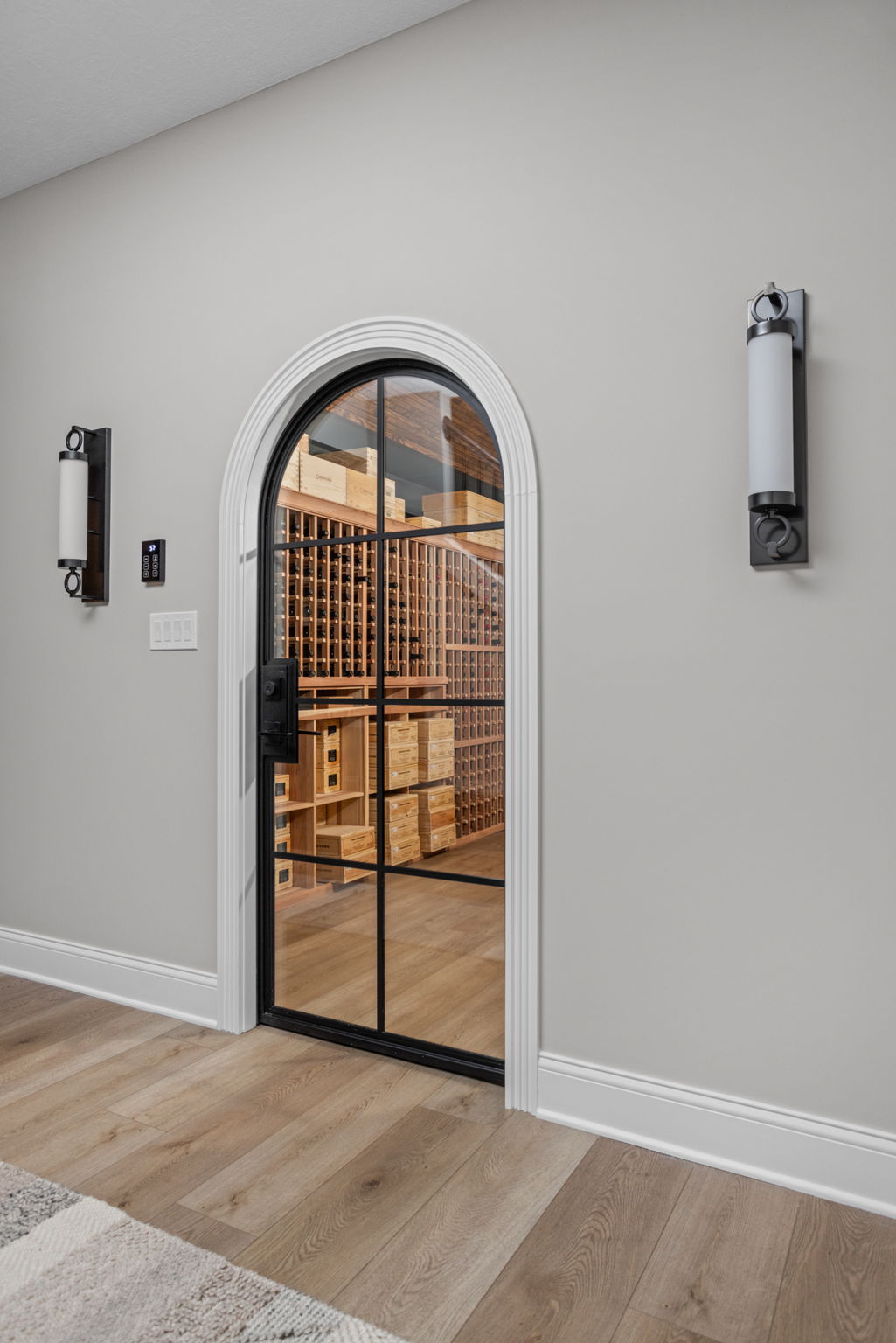
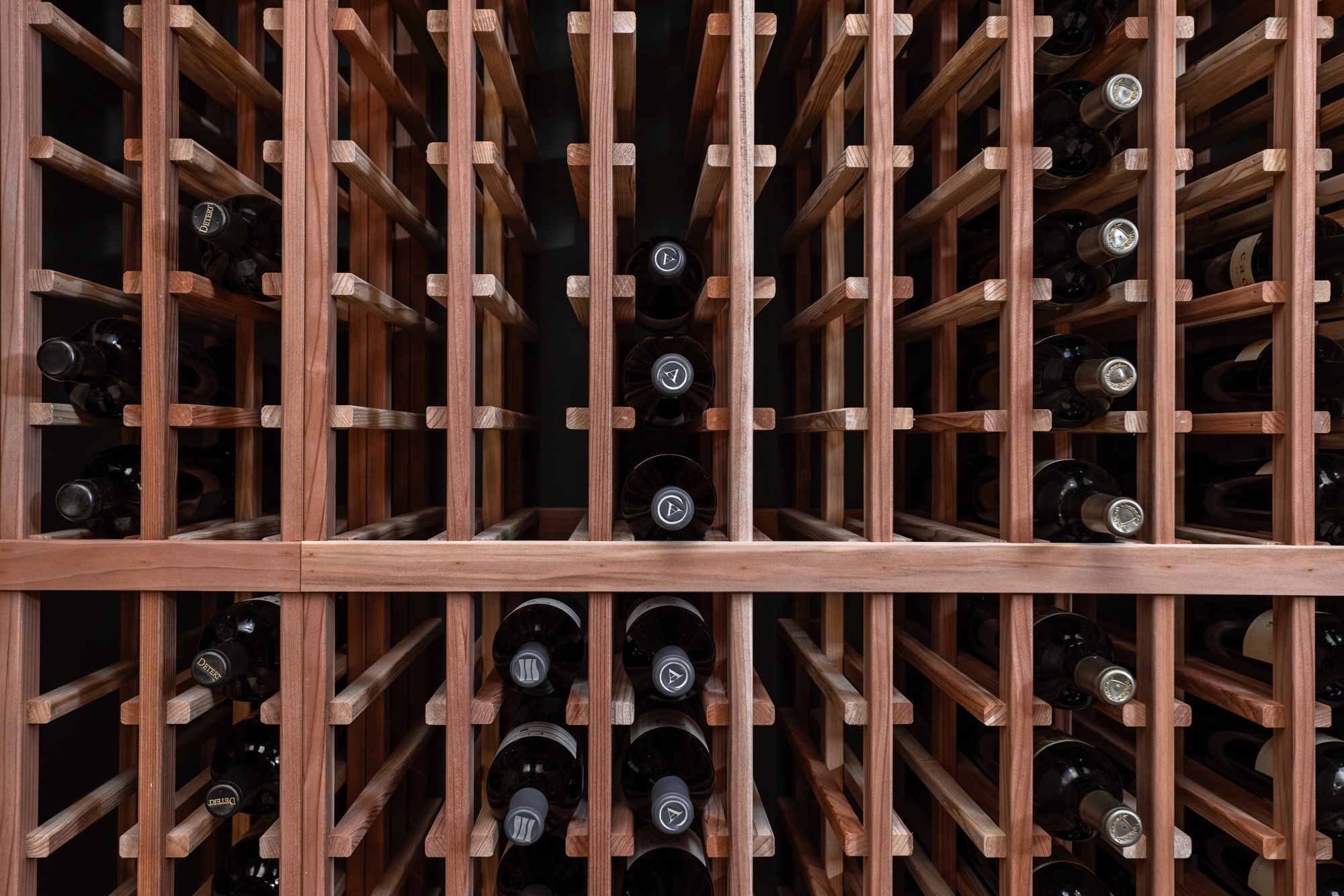
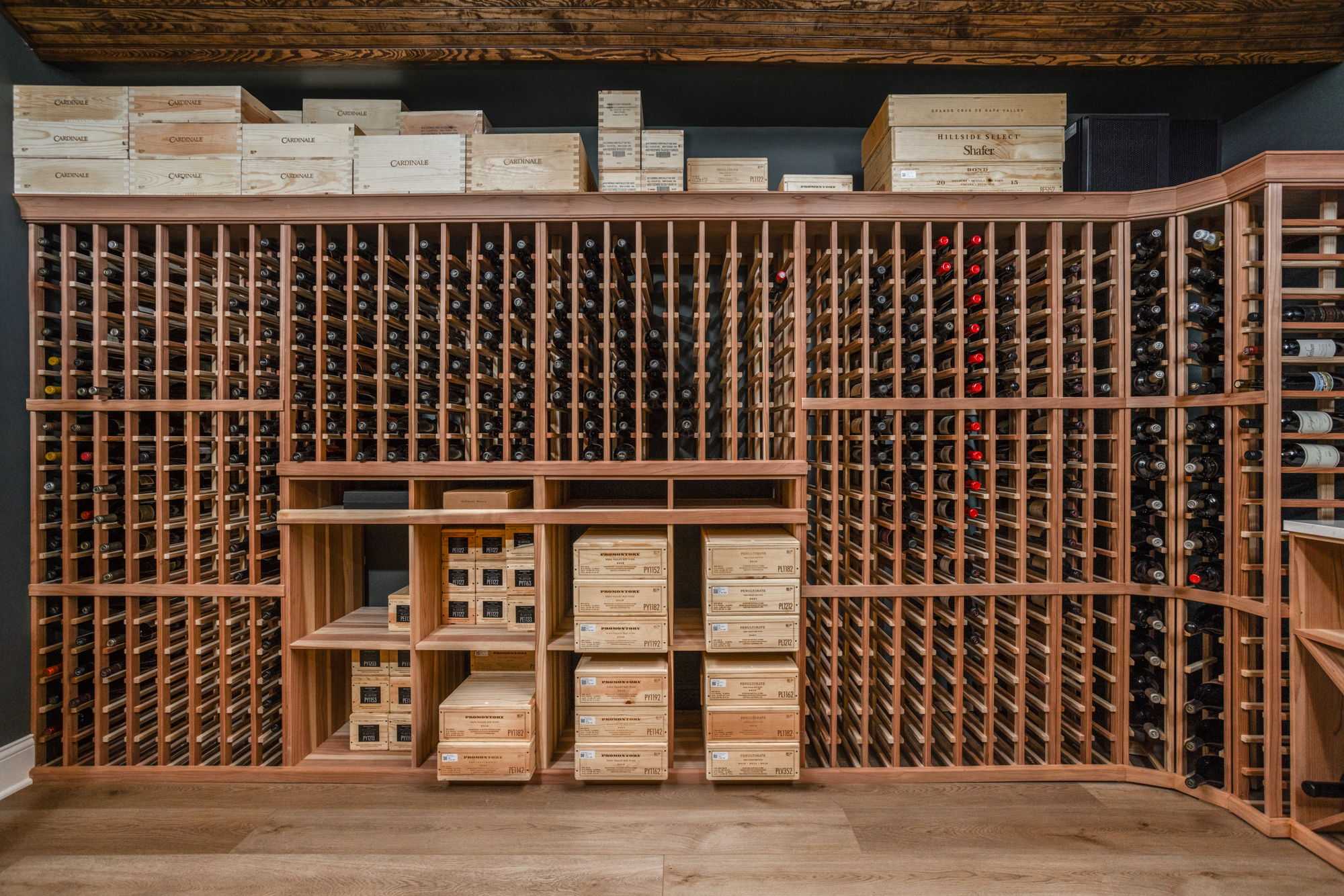
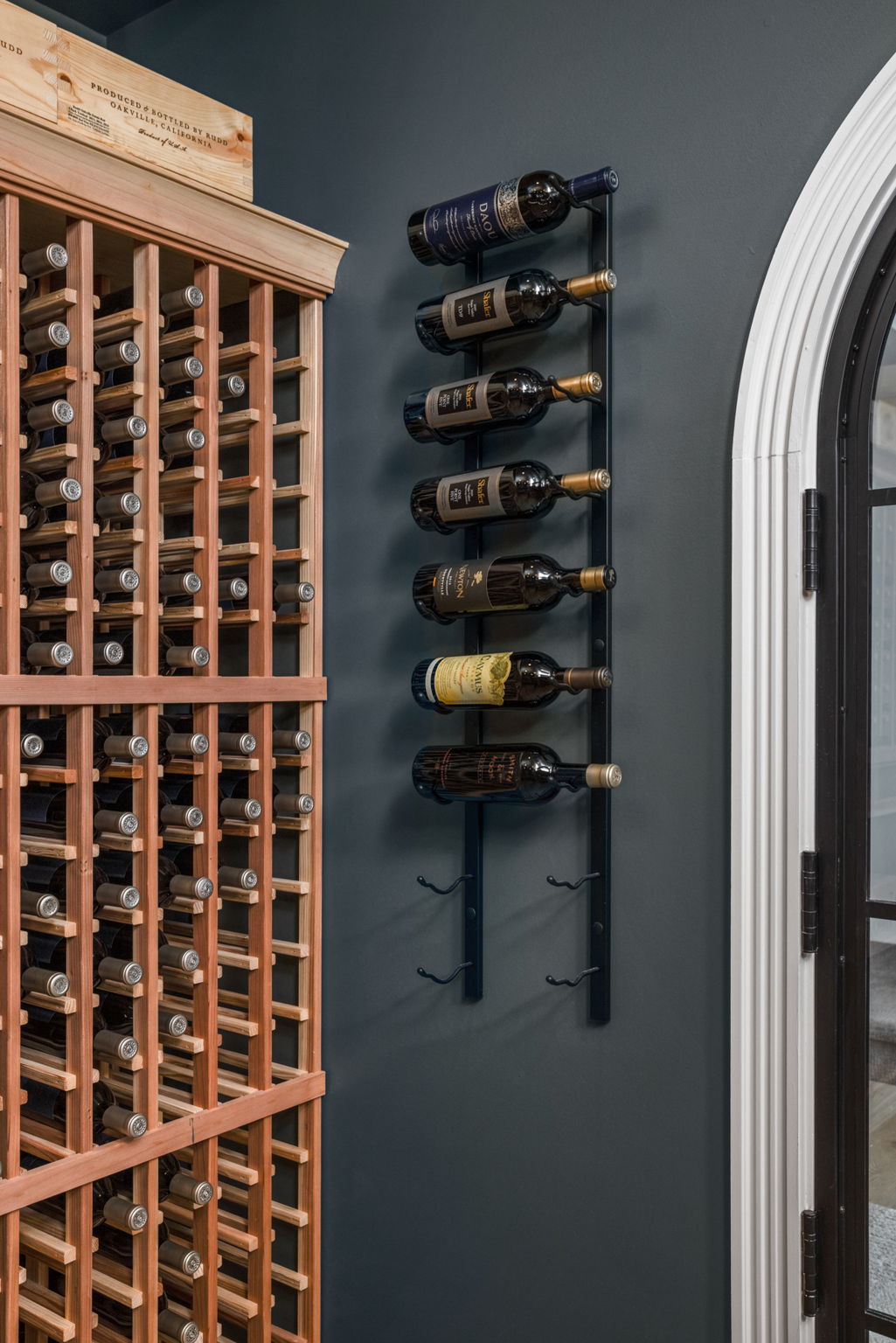
The wine rack plan was designed to hold approximately 322 bottles, including standard bottles and a smaller allocation for magnums. The layout also includes dedicated areas for case storage and select display moments, which helps the collection stay organized while giving special bottles more visual presence.
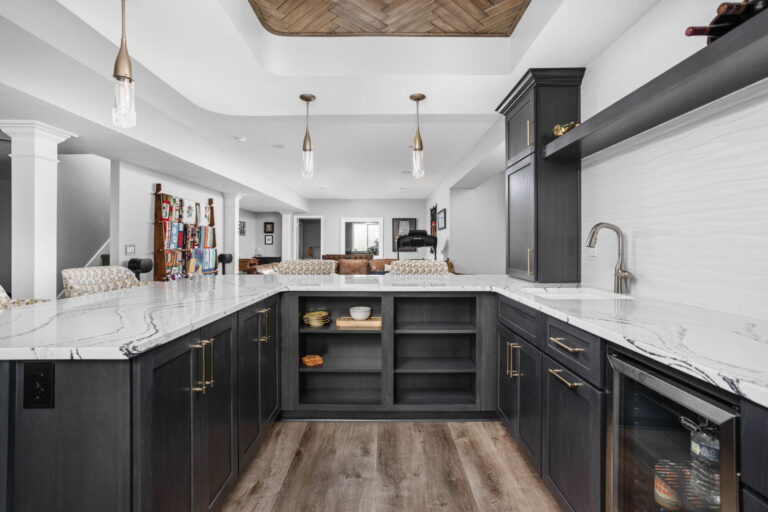
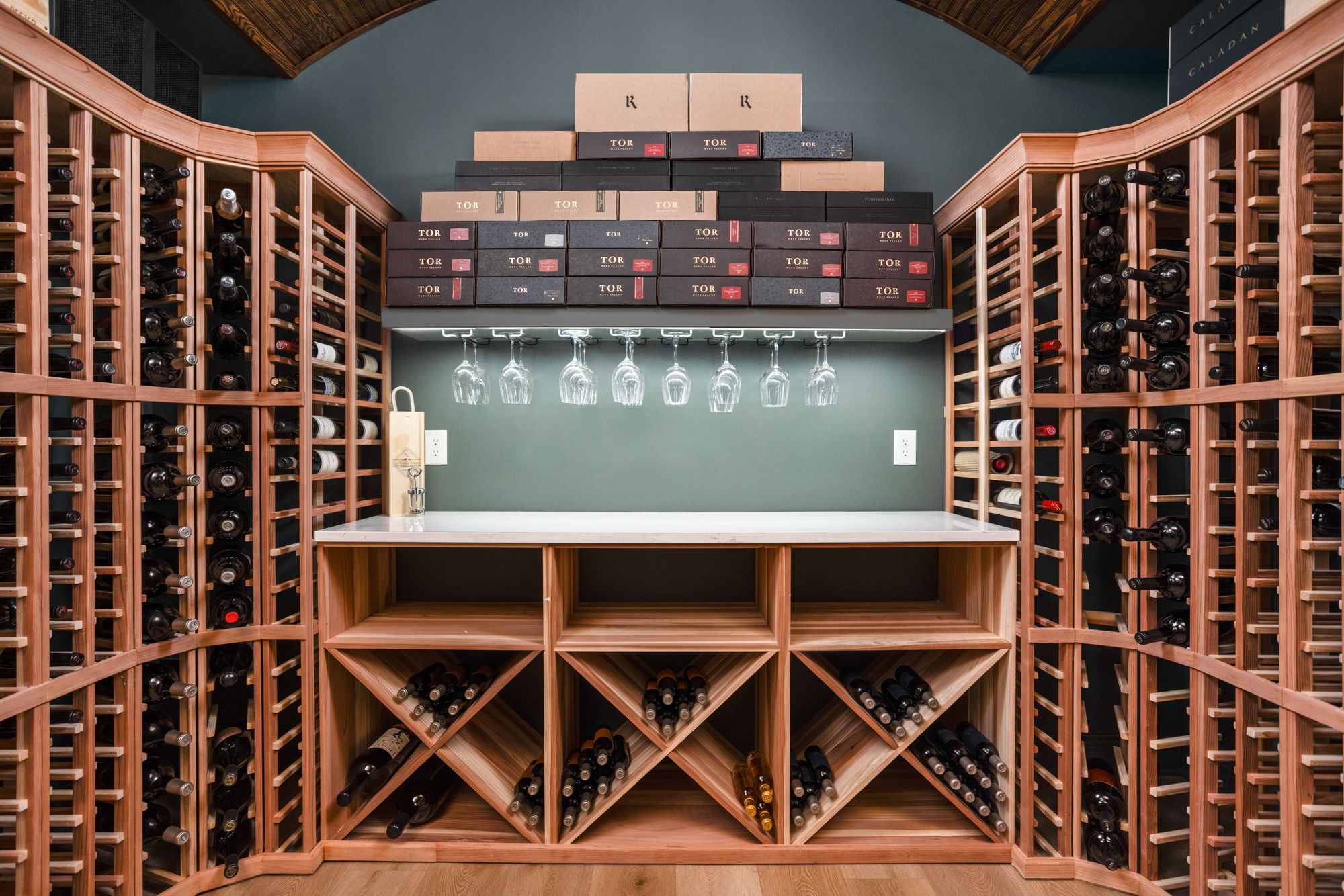
A central counter adds a practical layer to the room. It creates space to stage new purchases, sort bottles, set out glassware, or host a casual tasting without needing to move everything elsewhere in the basement. The quartz countertop supports that function with a durable surface that is easy to maintain.
Lighting that supports both function and atmosphere
A successful wine room needs lighting that works in more than one mode. This plan includes recessed lighting on dimmers, along with a chandelier and wall sconces on dimmers, so the room can shift from bright and task oriented to softer and more ambient.
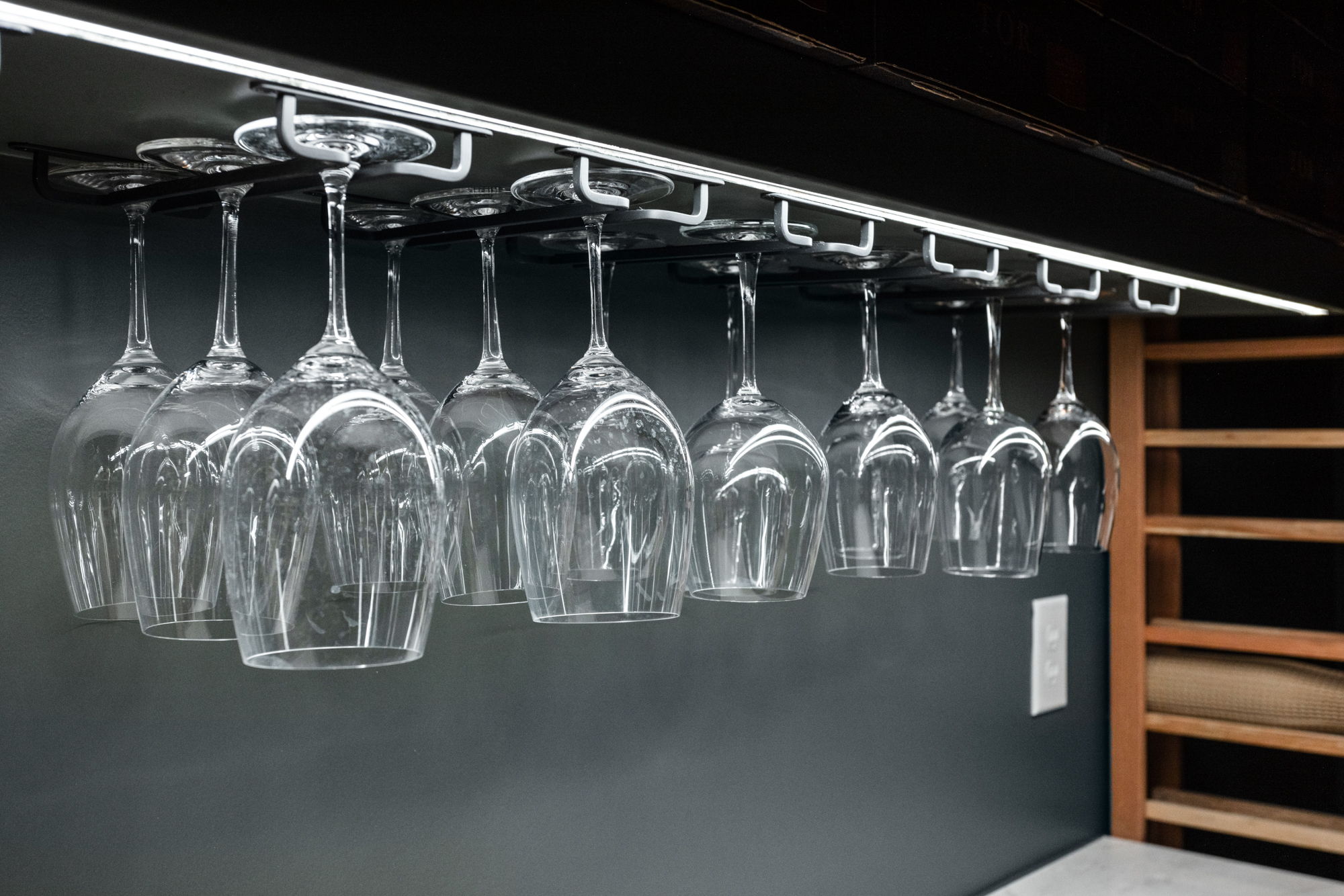
The floating shelf adds another layer of function with integrated tape lighting and wine glass storage below. That detail supports serving and display while helping the room feel finished from every angle.
Comfort focused basement planning
A wine cellar remodel has different needs than a typical basement renovation. This plan addresses that by relocating the nearby HVAC supply outside of the wine room, adding insulation in walls and ceiling, and using an insulated steel door at the wine room entry to help support a controlled environment.
The Worthington Way
This custom wine cellar was completed using The Worthington Way, a process designed to keep a basement remodel organized from the first planning decisions through the final walkthrough.
Design
In the design phase, the team defines how the room should function, reviews existing conditions, and develops a plan that fits the home’s layout. For this project, that meant clarifying storage goals, deciding where serving and display should live, and planning the ceiling and lighting so the room feels intentional.
Select
Selections bring the plan to life. This is where finishes, lighting, and storage details are coordinated so everything works together. The wine room’s counter, shelf, and lighting are designed to feel cohesive with the surrounding basement while still feeling like a distinct space.
Build
During build, the focus is quality craftsmanship and clear communication. The scope for this wine cellar included framing, drywall, trim, electrical updates, ceiling details, and installation coordination so the room comes together cleanly and performs as intended.
Storage for Bottle and Cases
Why This Works for a Carmel Basement Remodel
Homeowners searching for basement remodel near are often trying to do more than add square footage. They want purpose. This project is a strong example of how a finished basement company can turn an underused area into a space that is both practical and personal. A custom wine cellar also adds a layer of daily enjoyment, especially when it is designed for easy organization and entertaining.
Frequently Asked Questions About Custom Wine Cellars and Basement Wine Rooms
What should I look for in a designer for a custom wine cellar?
Look for a designer who understands that a custom wine cellar is more than a wall of racks. A successful wine cellar also depends on insulation, vapor barrier strategy, cooling coordination, lighting, electrical planning, and a layout that supports how the room will actually be used. Worthington approaches that work as part of a complete remodeling process, so the wine cellar feels integrated with the basement and performs more reliably over time. Proper cellar preparation commonly includes insulation and vapor barrier planning, which is one reason this type of project benefits from early design coordination.
What is included in a wine cellar renovation?
A wine cellar renovation often includes framing, insulation, vapor control, electrical updates, lighting, door selection, cooling system coordination, and custom storage planning. It is not only about the visible finishes. In this Carmel project, the design includes full perimeter racking, a central serving counter, layered lighting, a barrel ceiling detail, and a dedicated cooling system location planned to vent to the exterior within a new bulkhead.
Do I need climate control for a basement wine cellar?
Many basement wine cellars benefit from dedicated climate control, especially when the goal is long term storage. Even in a basement, the room still needs to maintain a steady environment rather than fluctuate with surrounding household conditions. Worthington addresses that early by considering insulation, the room enclosure, nearby HVAC conditions, and where cooling equipment should be located so the finished room can hold its environment more consistently. Wine storage guidance also emphasizes steady conditions rather than temperature swings.
What is the ideal temperature for storing wine?
For long term storage, wine is generally best kept at a steady temperature between 50°F and 55°F, with relative humidity between 50 percent and 70 percent. Consistency matters because temperature fluctuations can damage the wine over time. Serving temperatures can vary by type, but for cellar design, Worthington focuses first on creating a room that can support stable storage conditions through insulation, vapor control, and cooling coordination. Wine Enthusiast also notes that acceptable cellar monitoring often falls within a narrow range, such as 53°F to 57°F.
How do I plan custom wine storage for different bottle sizes?
The best starting point is the collection itself. Standard bottles, magnums, Champagne bottles, and case storage do not all fit the same rack layout, so the room should be planned around what the homeowner actually stores. In this Carmel wine cellar, the racking plan was designed for approximately 322 bottles, including standard bottles and a small allocation for magnums, while still allowing room for case storage, display areas, and a central serving counter. Specialty rack systems for magnums and Champagne also illustrate why one size does not fit every collection.
What makes a wine cellar feel integrated with the rest of the home?
A wine cellar feels integrated when it is planned as part of the architecture of the basement rather than treated as a storage closet. That usually comes from the layout, lighting, ceiling design, material selections, and the way the room connects visually to the surrounding spaces. In this Worthington project, the barrel ceiling, perimeter storage, central counter, and layered lighting help the room feel intentional and finished. Current wine cellar design coverage also shows that homeowners increasingly want wine rooms to function as visually meaningful spaces within the home, not just hidden storage.
Can a wine cellar be designed for both storage and entertaining?
Yes. Many homeowners want a wine cellar to support both proper storage and a more enjoyable hosting experience. That usually means balancing bottle capacity with features like a serving counter, display storage, glass storage, and lighting that can shift from practical to more ambient. In this Carmel project, the central counter and layered lighting help the room work for everyday organization while also making it more comfortable for tastings and gatherings.
How many bottles can a custom wine cellar hold?
Capacity depends on the racking layout and how much of the room is dedicated to standard bottle storage versus display, case storage, or specialty bottle sizes. This Carmel wine cellar was planned for roughly 322 bottles total, which supports a meaningful collection while still leaving room for a central counter and a finished, comfortable layout.
What materials are best for wine cellar racks?
Wine racks should be stable, well supported, and designed for the bottle sizes you actually store. Many homeowners choose systems that include a mix of standard storage, display areas, and case storage so the room stays organized as the collection evolves. In The Worthington Way, we focus on a storage plan that fits your habits, not just a single wall of racks.
Should a wine room have an exterior vent?
If the wine cellar includes a dedicated cooling system, venting and airflow requirements should be planned carefully. Some systems need exterior venting or specific air pathways, and those details can impact bulkheads, framing, and finishes. For basement remodel companies near me, this is a common reason to plan the wine room early, before drywall and trim decisions are finalized.
What kind of door is best for a wine cellar?
The door should support the room’s goal, whether that is true temperature control, display, or a mix of both. An insulated door can help reduce air exchange and support a more controlled environment. Door selection is also a visual decision, and it should feel appropriate for the style of the finished basement and the wine cellar design.
How long does it take to build a custom wine cellar in Carmel IN?
Timeline depends on scope, especially if the project includes new walls, ceiling details, electrical changes, and climate control planning. In The Worthington Way, the process begins with design and selections so the build phase can move forward with fewer surprises. That structure helps homeowners stay informed and keeps a basement remodel organized from start to finish.
Ready to Plan Your Basement Wine Cellar?
If you are exploring a custom wine cellar Carmel IN and want a clear plan from concept through construction, Worthington can help you take the next step with one team and one process.
Custom Home Remodeling
Your home is unique, your remodel should be, too. We specialize in custom renovations, from full interior overhauls to simple updates. At every step, your style and needs shape the design. That’s why Zionsville homeowners choose us for home improvements that truly fit.
Let’s create the space of your dreams. Schedule a consultation today to explore the possibilities!