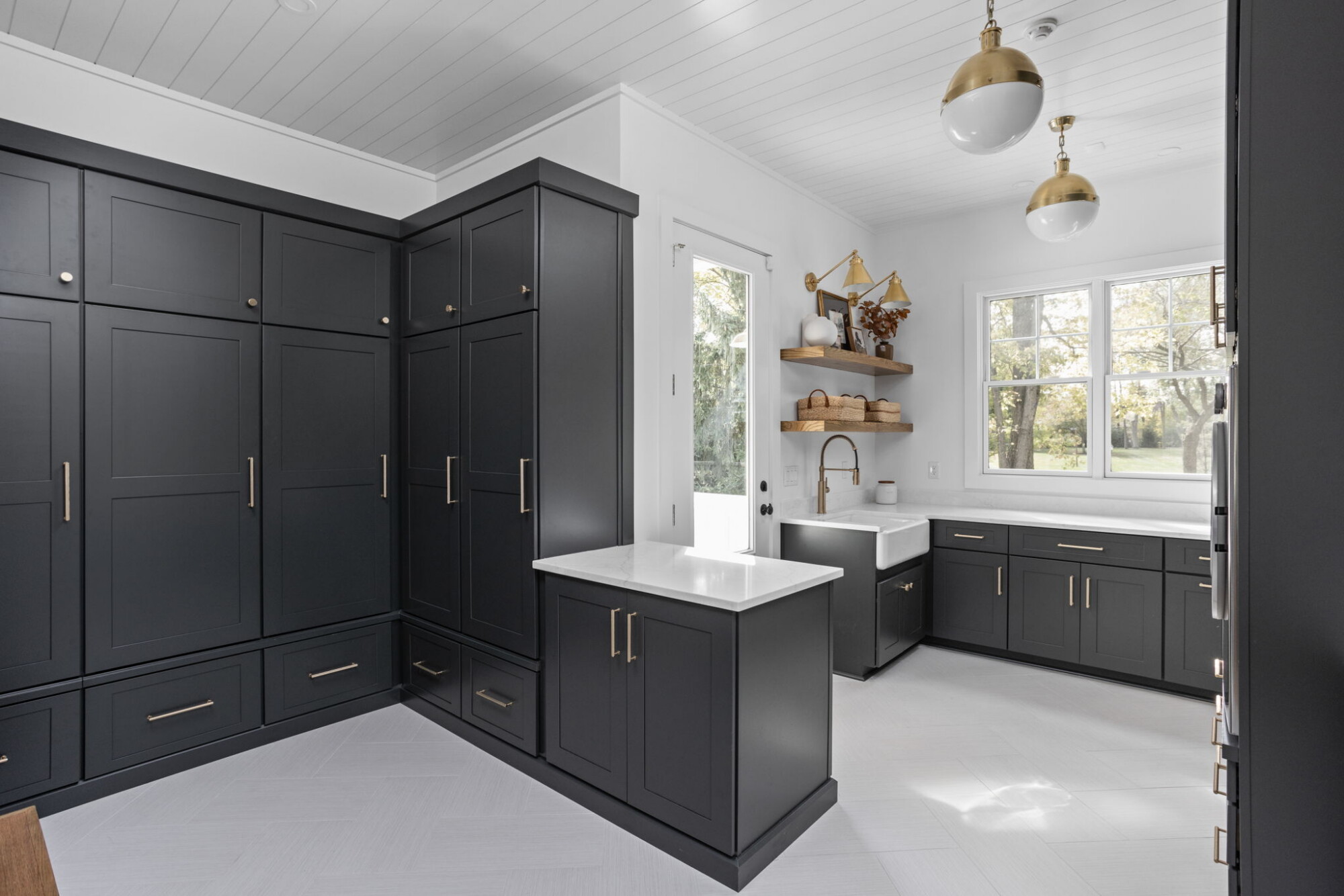
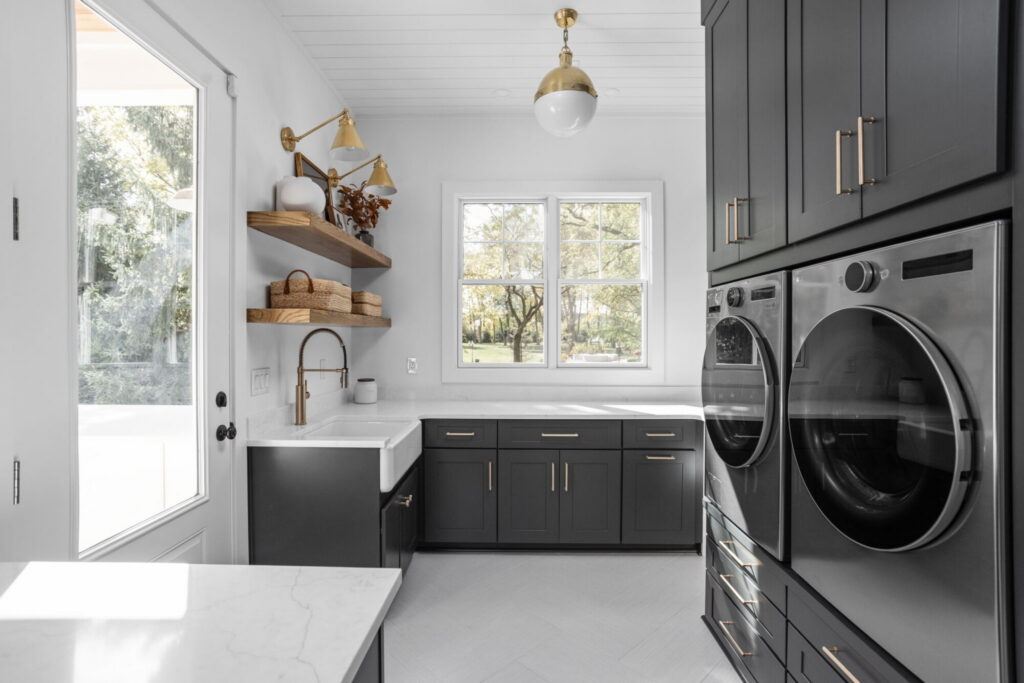
This laundry room remodel in Carmel was designed to make daily routines simpler and more efficient. By pairing a hardworking laundry zone with an integrated mudroom and refreshed coat closet, the space now supports real life: drop off, clean up, reset, and move on with your day.
Design Summary
The goal was clear, to create an organized, easy to maintain laundry and mudroom that feels easy the moment you walk in. The plan centered on three priorities:
- A dedicated laundry work zone with generous counter space and laundry room cabinets.
- A mudroom landing area that keeps everyday items off the floor and out of sight
- Storage that accounts for pets, cleaning supplies, and seasonal overflow without crowding the room
The result is a space that functions like a true utility room while still feeling cohesive with the rest of the home.
The Remodel Planning Story
In the original layout, laundry and mudroom functions shared space but did not have clear zones. In the updated plan, cabinetry and counter runs define each task area and guide movement through the room. Worthington also coordinated several behind the scenes upgrades so the finished space works as well as it looks, including a refined lighting plan, adjusted mechanicals where needed, and trim details that make the room feel finished.
This is where the Worthington Way process matters. A laundry room renovation looks simple when it is complete, but it relies on a tight plan. Measurements, appliance specifications, cabinet clearances, electrical placement, plumbing locations, and material lead times all have to line up. Worthington’s process is built to connect those decisions early so construction feels steady and predictable.
Layout and Flow
This plan balances storage with breathing room by creating clear zones for every task.
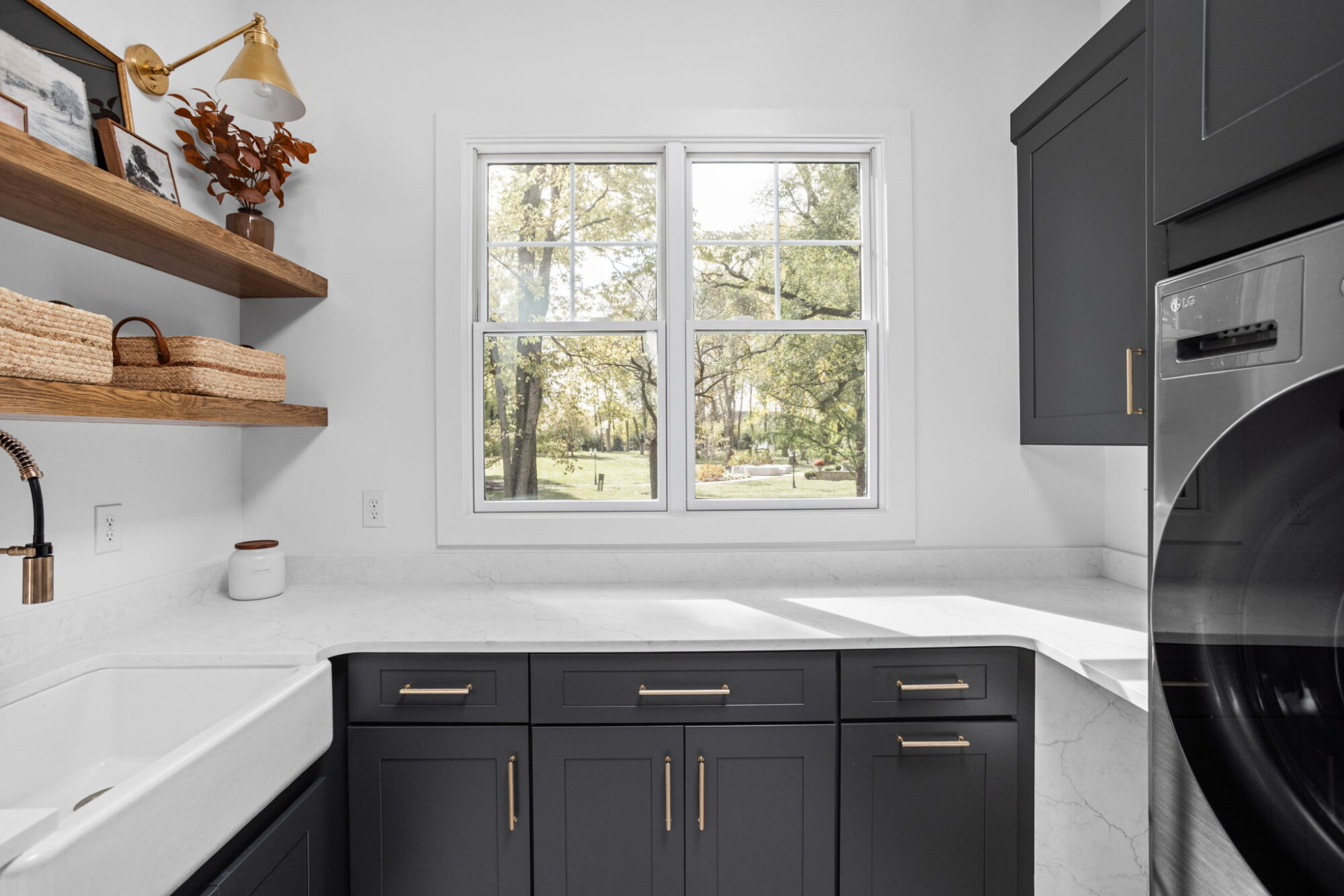
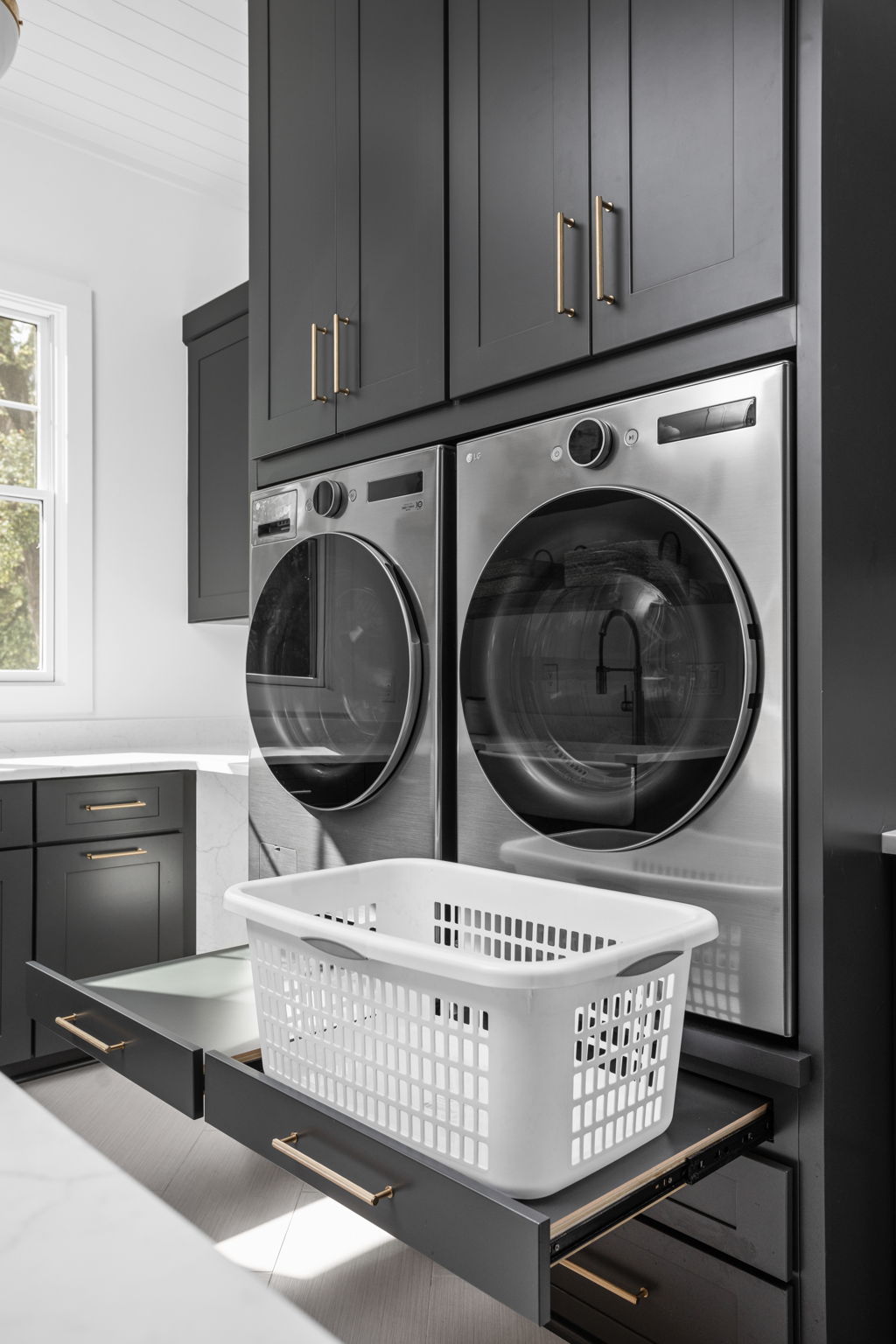
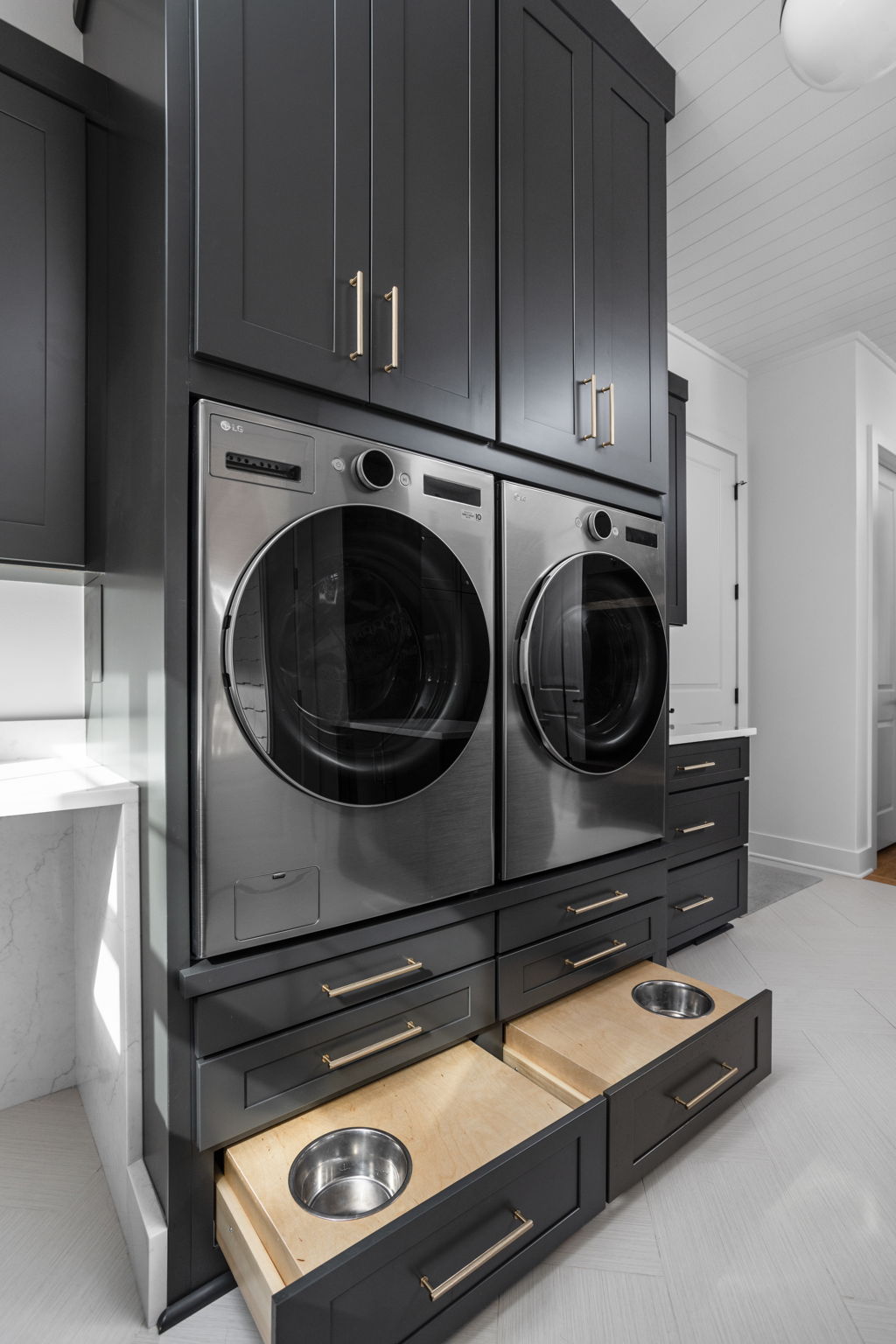
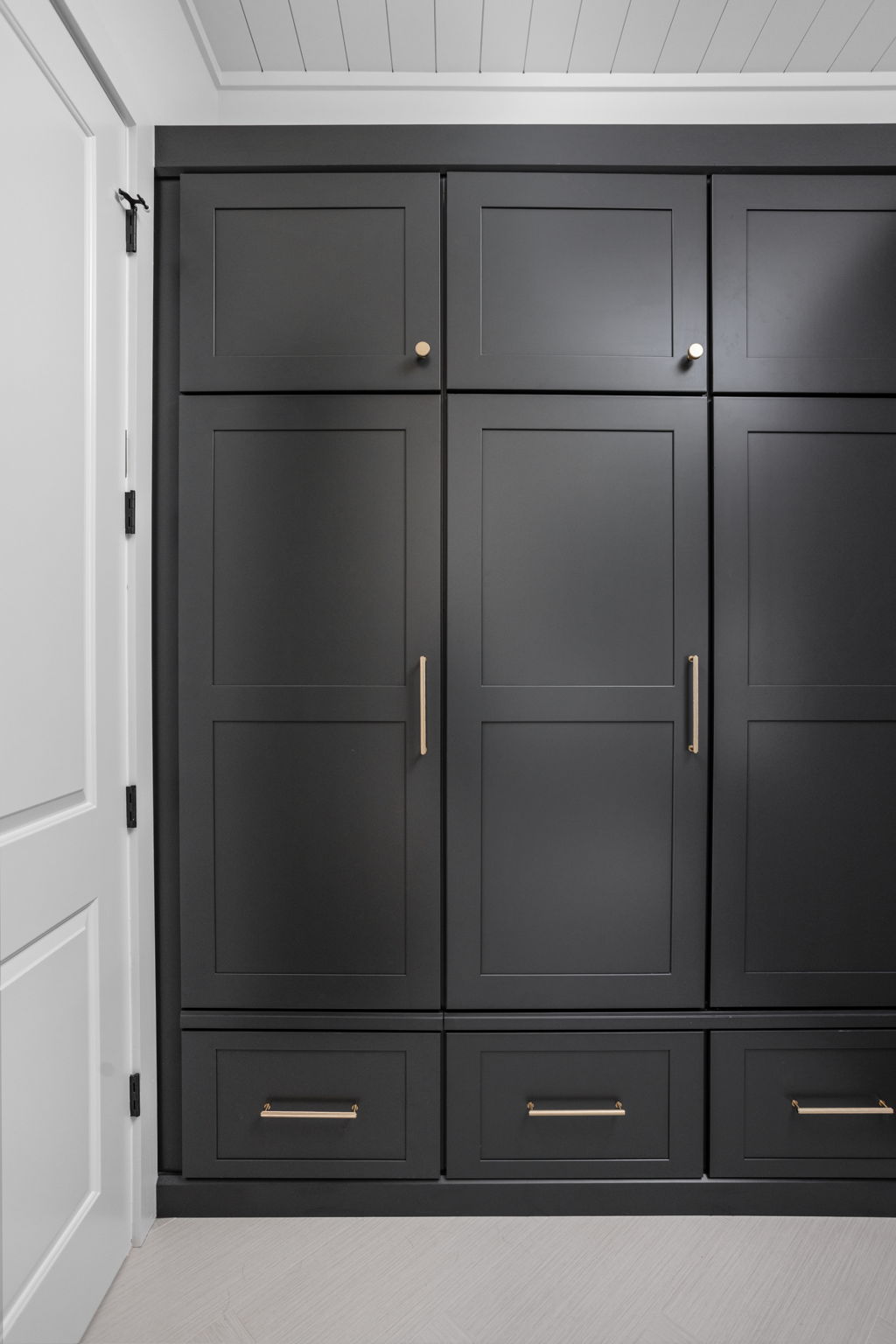
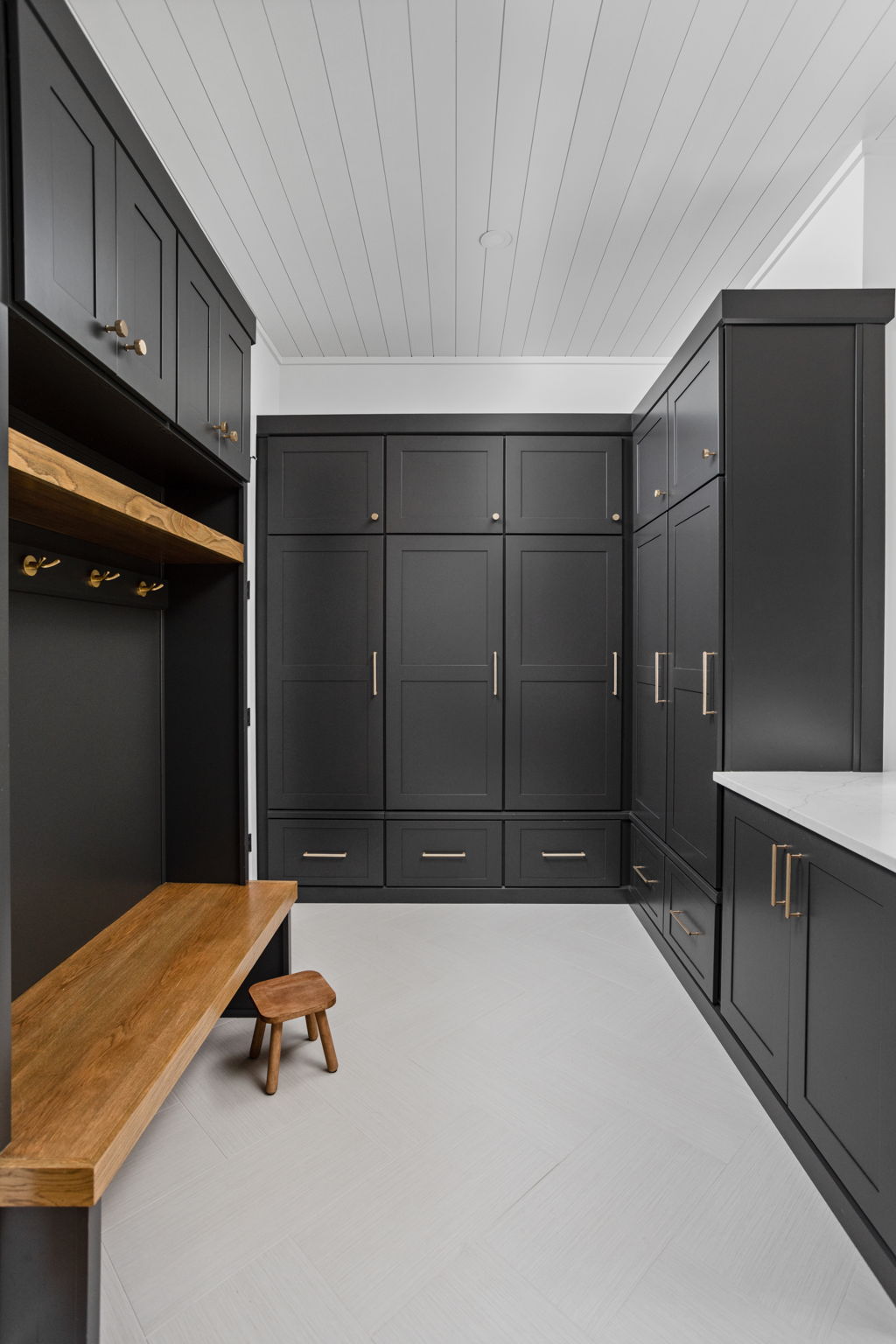
The laundry wall is organized around the washer and dryer, set on a raised platform with a durable countertop surface above for folding and sorting. Across the room, an L shaped counter and sink zone creates a natural place for treating stains, hand washing, and quick cleanup. Nearby, the mudroom area includes a built in bench and wall hooks so bags, coats, and shoes have a consistent home. The adjacent coat closet was updated with site built shelving and a hanging rod so seasonal storage stays organized and accessible.
Because the zones are clearly defined, the room works whether you are running a quick load or managing the daily rhythm of a busy household.
Storage and Organization Features
If you are collecting laundry room organization ideas, this project is a great example of how the right accessories can reduce countertop clutter and keep routines moving.
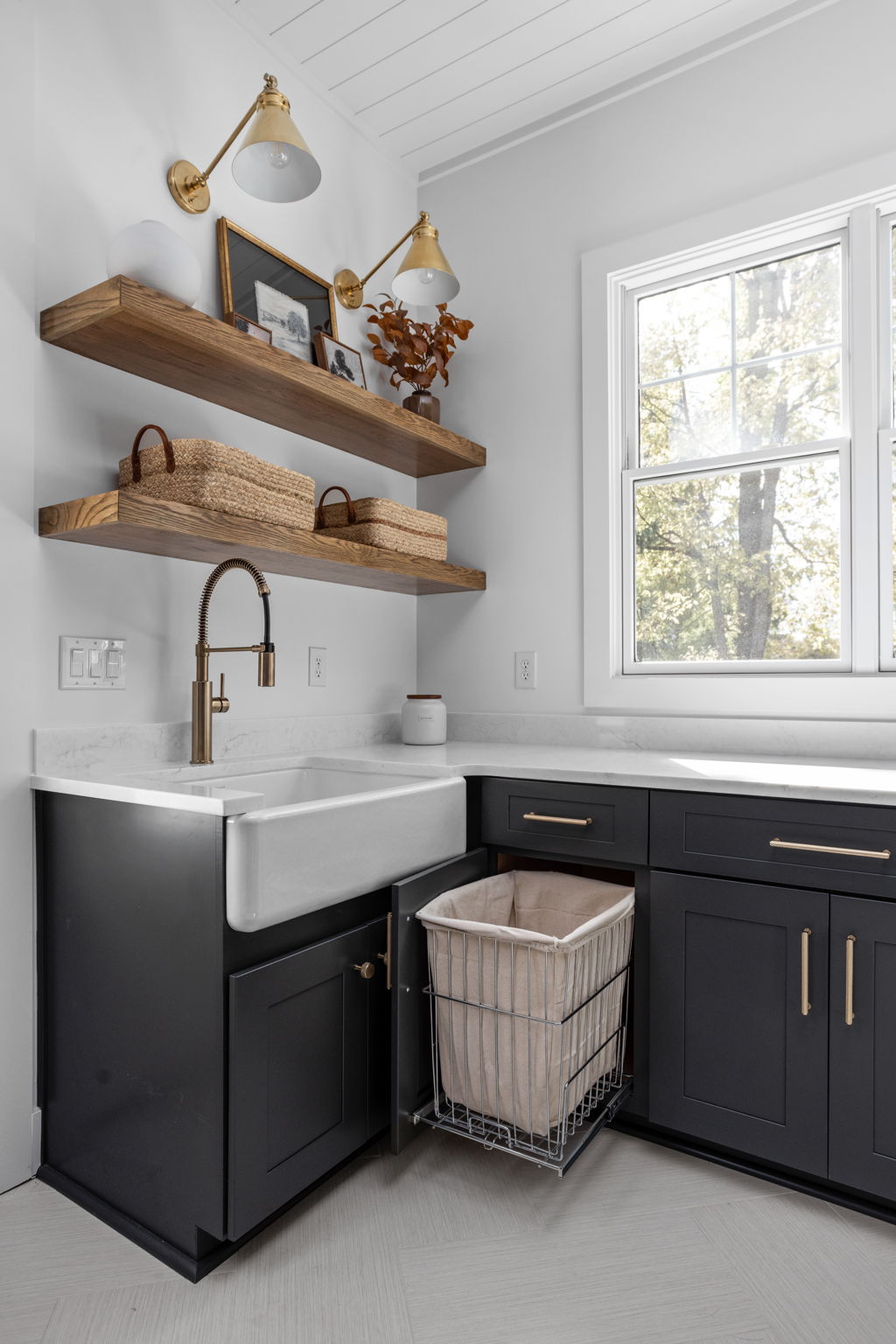
Laundry hamper pull out storage to keep sorting contained
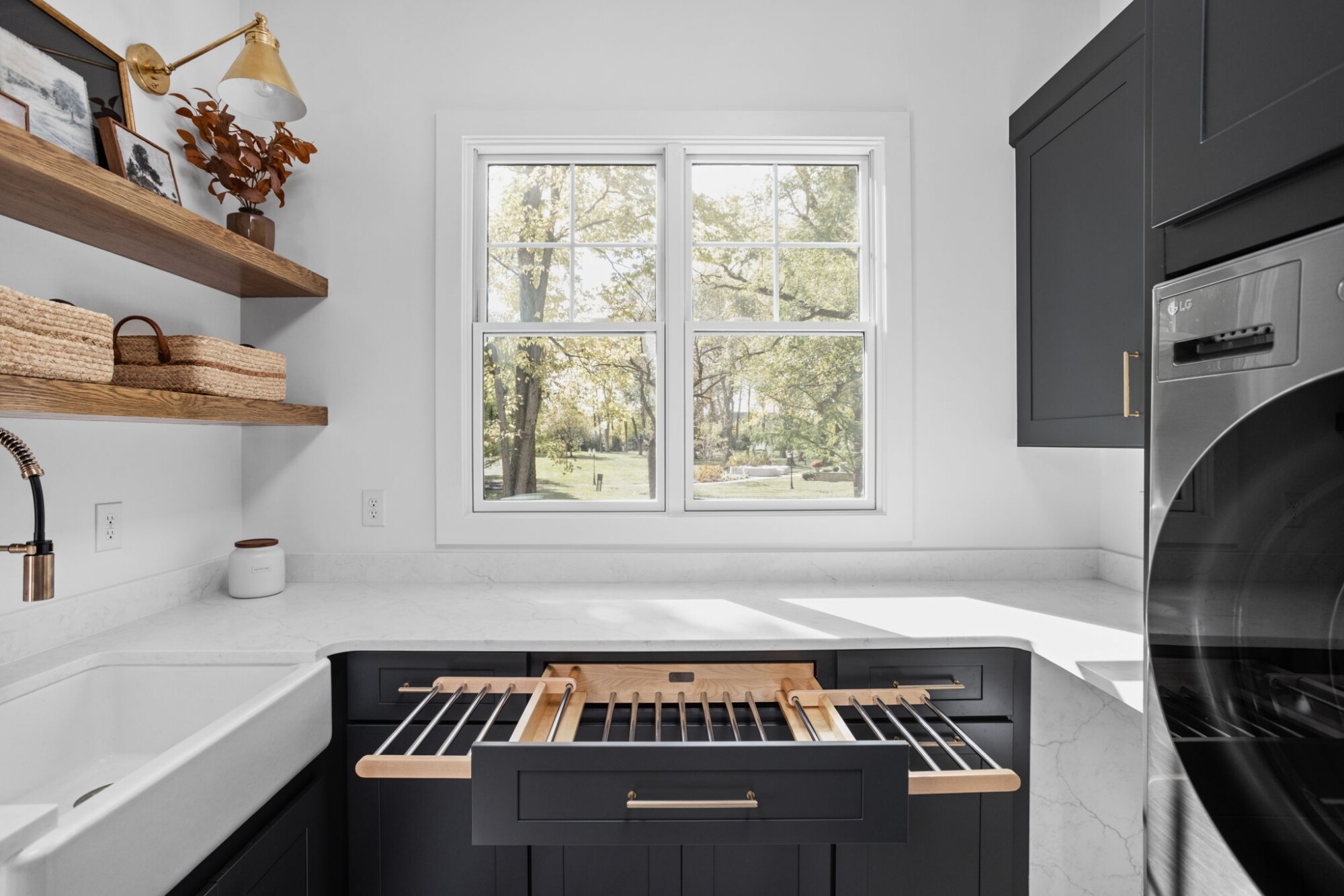
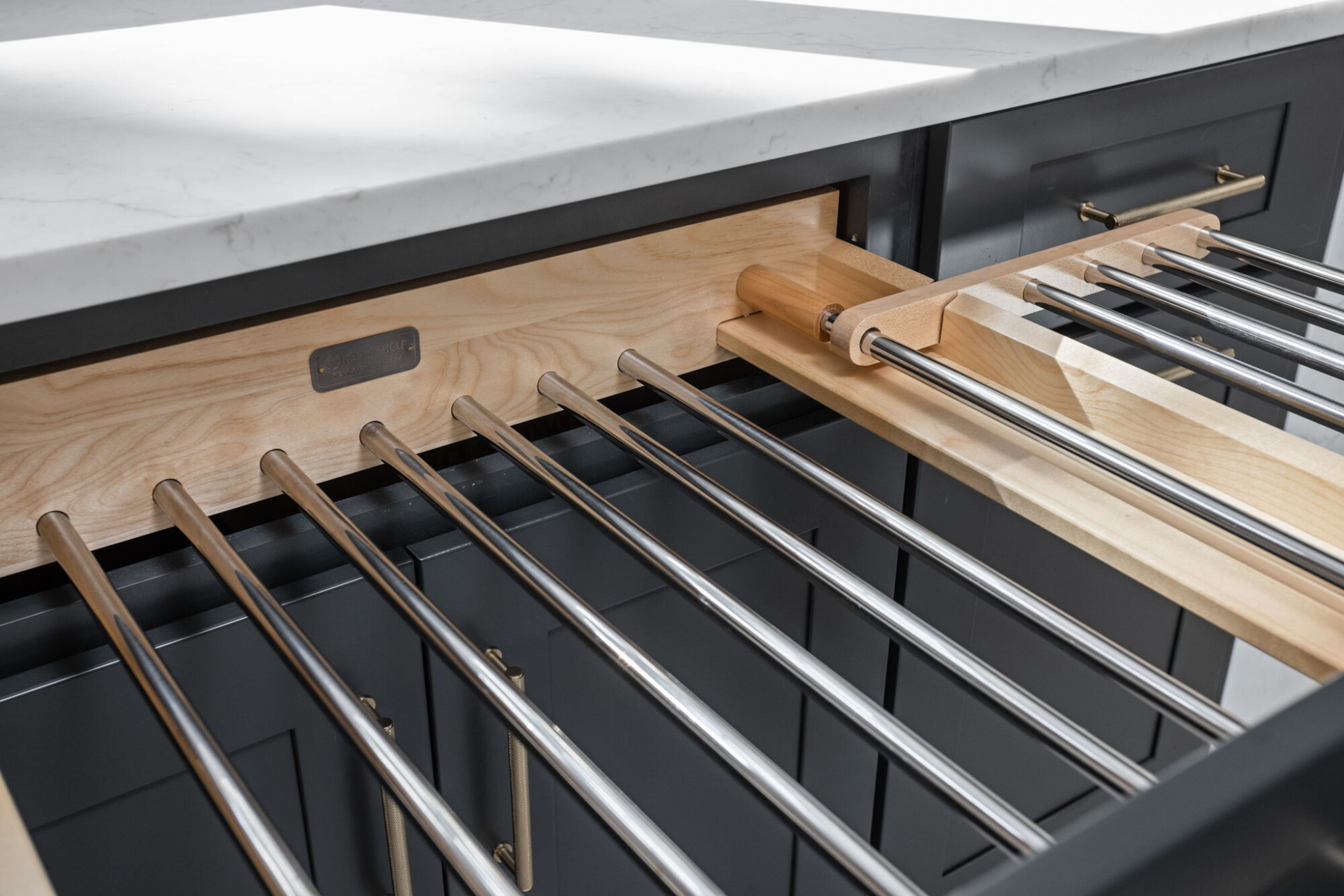
A pull out drying rack that supports air dry items without taking over the room
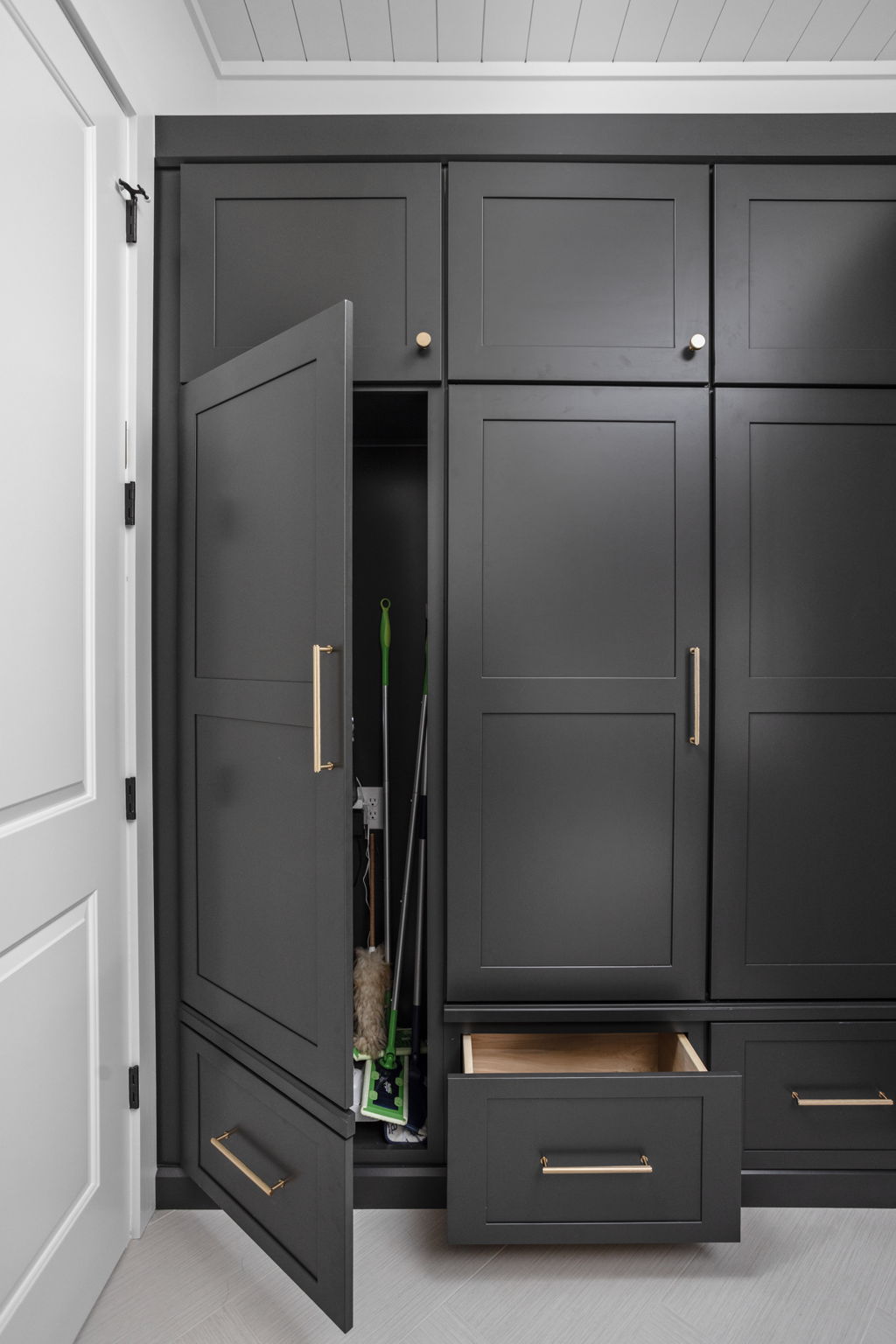
Purpose planned storage for cleaning tools, vacuums, and everyday supplies
A dedicated pet station with an under counter water bowl space and protective wall panels
Pull out storage for pet food bins so bulky bags stay out of sight
Floating shelves that add display and grab and go storage without visual weight
Together, these details create the kind of laundry room storage that feels effortless to keep up with.
Lighting That Supports Daily Use
This laundry room renovation uses layered lighting so the room works day or night.
Wafer lights on dimmers for even ambient light
Pendant lighting to bring focus to key work areas
Sconces over the floating shelves for a warm, finished feel
Under cabinet lighting to brighten countertops and reduce shadows
Good lighting is one of the most underestimated upgrades in a laundry room remodel. When lighting is planned around real work zones, the entire room feels easier to use.
Materials and Finishes
The surfaces were selected to be durable, wipeable, and timeless.
Flooring is a 12×24 porcelain tile set in a herringbone pattern for a tailored look that still performs in a high traffic room. Countertops are quartz with a coordinating backsplash for easy cleanup. A shiplap ceiling adds texture and depth while keeping the palette bright.
Worthington’s approach to selections focuses on long term performance. Utility spaces work hardest, so the finishes need to handle moisture, daily traffic, and quick wipe downs without looking tired.
Why the Worthington Way Matters
Projects like this succeed when the details are coordinated, not when they are left to chance. The Worthington Way process brings structure to every phase, from planning through construction.
During planning and design, Worthington clarifies goals, confirms measurements, and develops a layout that supports how you live. During the selections phase, finishes and fixtures are chosen with function and durability in mind, and the team verifies compatibility and lead times. Before construction begins, the scope is organized and scheduled so the trades can work in the right order. During construction, communication stays consistent so progress is clear and decisions stay aligned with the plan.
Frequently Asked Questions
How long does a laundry room remodel usually take?
A laundry room remodel timeline depends on three things: planning, product lead times, and how much behind the walls work is required. If the project includes cabinetry, tile, lighting, and plumbing changes, the calendar can stretch because each trade needs a clean handoff. The Worthington Way process is designed to reduce surprises here. During the planning and design phase, our team confirms measurements, appliance specifications, and clearances so cabinetry and countertops are ordered correctly the first time. We also map the sequence of work so electrical, plumbing, and drywall are coordinated before finish materials arrive. Once construction begins, a structured schedule and consistent communication help the project move forward in a predictable way, even when multiple spaces like a mudroom and closet are included.
What are the biggest cost drivers in a laundry room renovation?
The biggest cost drivers are typically cabinetry, countertops, tile installation, plumbing fixtures, and lighting. Cabinetry often leads because it sets the storage capacity, the accessory options, and the overall feel of the space. Tile can also move the budget depending on the material, the pattern, and the installation complexity. Lighting upgrades, especially layered lighting with dimmers and under cabinet lighting, add comfort and function but should be planned early. In the Worthington Way process, we focus on clarity before commitments. During design development, we align your wish list with real selections and a realistic scope so you understand where your investment is going. We also look for smart value choices, like spending where durability matters most and simplifying details where they do not change the experience of the room.
Is it worth adding laundry room cabinets instead of open shelving?
In most homes, laundry room cabinets are worth it because they reduce visual clutter and make the room easier to maintain. Closed storage gives you a place for cleaning supplies, pet items, extra paper goods, and the daily overflow that tends to land on counters. Open shelving can still have a role, especially for frequently used items or a small styling moment, but it works best when the room already has enough closed storage to carry the load. The Worthington Way process helps you decide this with intention. During planning, we talk through what you actually need to store and how you move through the space. Then the design is built around zones, so cabinets support your routines rather than forcing you to adapt to the room.
What features improve laundry room organization the most?
The biggest organization improvements usually come from surfaces and systems that remove decision fatigue. A dedicated folding counter creates a clear workspace. Hamper pull outs keep sorting contained. Vertical storage helps brooms, mops, and vacuums stay off the floor. Task lighting makes everything feel easier, from stain treating to quick cleanups. In this project, pull out accessories and defined zones help keep countertops open and the room calm.
The Worthington Way process is important here because these features need to be planned before cabinetry is ordered. During design, we confirm accessory sizes, cabinet interiors, and clearances so the hamper storage, drying rack, and pet storage function exactly as intended. This is where a laundry room remodel shifts from looking organized to truly staying organized.
Can you combine a mudroom and laundry room in one space?
Yes, and it can be one of the most efficient upgrades in a home when it is planned correctly. The key is zoning so each function has its own landing space and its own storage. A mudroom needs hooks, a bench, and easy access storage for shoes and bags. The laundry zone needs a work surface, contained sorting, and storage for supplies. This plan intentionally separates the laundry work area from the drop zone and closet storage.
With the Worthington Way process, we start by understanding how your household enters the home, where items pile up, and what routines create friction. Then we translate that into a layout that supports traffic flow. During construction, our team coordinates the details that make a combined space succeed, like durable surfaces, lighting placement, and the right storage accessories in the right locations.
What is a smart flooring choice for a tiled laundry room?
Porcelain tile is a smart choice because it is durable, water resistant, and easy to maintain. A larger format tile can reduce grout lines, which helps cleaning feel less fussy in a utility space. Patterns like herringbone can add movement and a tailored look without relying on trendy finishes. In the Worthington Way process, flooring is selected with both performance and the overall home style in mind. During design, we review slip resistance, grout color, and transitions to adjacent spaces so the finished floor looks intentional and functions well. That early coordination also helps the construction schedule because tile layout, underlayment needs, and trim details are solved before installation begins.
Do I need special lighting in a laundry room?
Laundry rooms benefit from layered lighting because you are doing detailed tasks in a space that is often used early in the morning or late at night. Even illumination helps with sorting and stain treating, while under cabinet lighting keeps counters bright and reduces shadows. Dimmers give you control so the space can feel softer when you are simply passing through. The Worthington Way process addresses lighting early because lighting is both functional and finish driven. During design, we plan fixture placement around cabinetry, shelves, and work zones. During construction, the electrical plan is executed before tile and cabinetry installation so everything lands exactly where it needs to. That is how lighting becomes a quiet improvement you feel every day, not a detail you wish you had added later.
How do you plan storage for pets in a laundry or mudroom?
Pet storage works best when it is designed around real habits, not idealized routines. If food bags end up in the pantry, you still need a contained spot for bins, scoops, and treats. If water bowls migrate, an under counter station can help keep the floor cleaner and reduce trip hazards. In this project, the plan includes a dedicated pet station with protected wall areas and pull out storage for pet food bins.
Through the Worthington Way process, we talk about how pets use the space and how the room should handle mess. Then we plan materials and storage to support that reality. During design, we confirm the right pull out sizes and interior cabinet configurations. During construction, we coordinate durable finishes and details like protective panels so the pet zone is easy to wipe down and built to last.
What should be included in a small laundry room design?
A small laundry room can still work beautifully when every inch is planned with purpose. The essentials are a clear work surface, contained sorting, vertical storage, and lighting that supports daily tasks. Even in a compact space, a folding counter can be included, and hamper storage can be built into cabinetry so the floor stays clear. The Worthington Way process helps small spaces succeed because it starts with real measurements and real routines. During planning, we confirm appliance specifications and clearances. During design, we map where supplies should live and how the room should function day to day. During construction, the details are installed to match the plan so the room feels organized, not improvised.
Can you update a coat closet as part of a laundry room remodel?
Yes, and it is often worth it when the laundry room connects to an entry. A coat closet can either support the mudroom or compete with it. Updating shelving and hanging space can reduce overflow and keep the whole area working together. In the Worthington Way process, these adjacent spaces are considered part of the same daily routine. During planning, we identify where coats, bags, seasonal items, and cleaning supplies should go. During design, closet storage is organized with the right mix of shelves and hanging space. During construction, the details are finished so the closet feels intentional and easy to use, which makes the whole laundry and mudroom tidy
Contact Us
If you are collecting laundry room remodel inspiration and want to explore what is possible in your Carmel home, we can help you map the plan, selections, and timeline with clarity. Visit The Worthington Way to learn about our process, then connect with our team to start the conversation.
Ready to Remodel?
Let’s create the space of your dreams. Schedule a consultation today to explore the possibilities!